Date : 2026-06-22
Introduction
The global gemstone industry thrives on trust, accuracy, and transparency. Whether someone is purchasing a dazzling sapphire, a rare emerald, or a brilliant ruby, buyers want assurance that the stone they are investing in is genuine and accurately evaluated. This is where gemstone certification becomes essential.
Today, professional gemstone certification labs play a critical role in the jewelry market by providing independent assessments of precious stones. These laboratories conduct detailed examinations to determine a gemstone's identity, origin, treatments, and overall quality. Their findings are documented in a comprehensive gemstone grading report, helping consumers, jewelers, and investors make informed decisions.
As demand for high-value gemstones continues to grow, understanding how a gemological laboratory tests and grades precious stones has become increasingly important. In this article, we explore the science behind gemstone testing, the methods used for gemstone authenticity testing, and the standards that guide gemstone quality grading.
What Is Gemstone Certification?
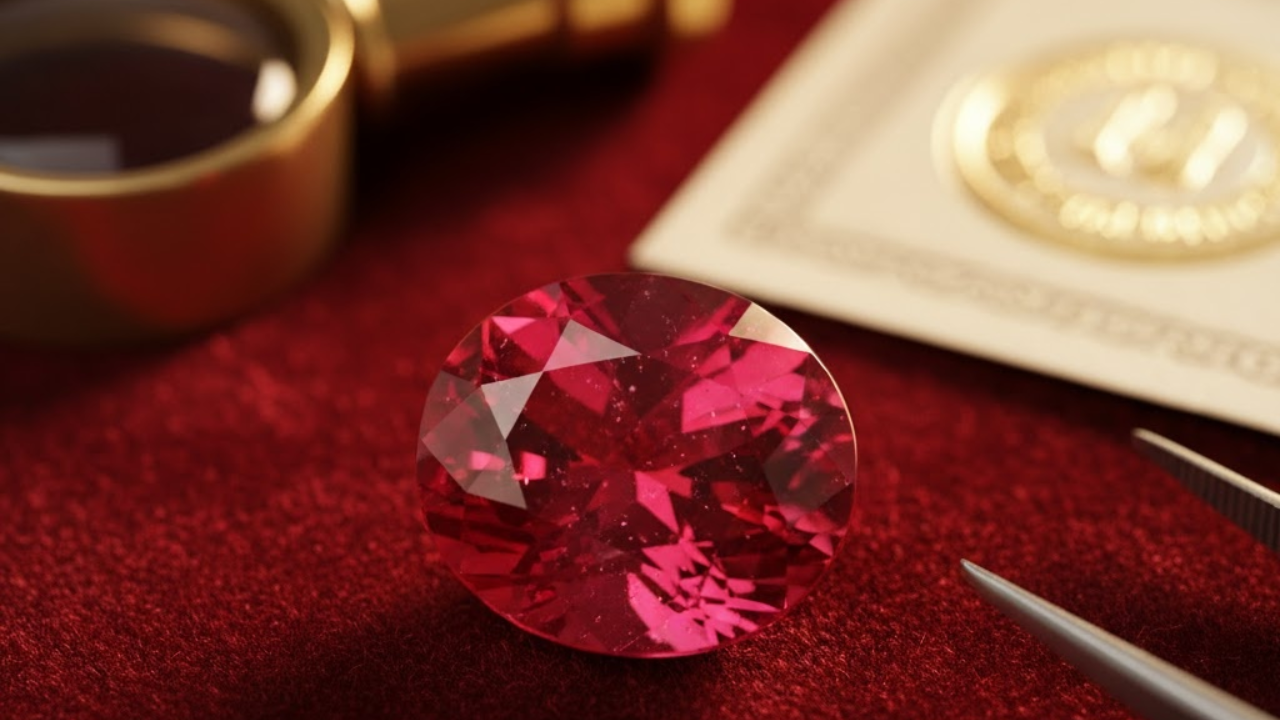
Gemstone certification is the process through which a qualified gemological laboratory evaluates a gemstone and issues an official report detailing its characteristics. This report serves as an independent verification of the stone's identity and quality.
A certification typically includes information such as:
- Gemstone type
- Weight (carat)
- Dimensions
- Color
- Clarity
- Cut or shape
- Natural or synthetic origin
- Treatment disclosures
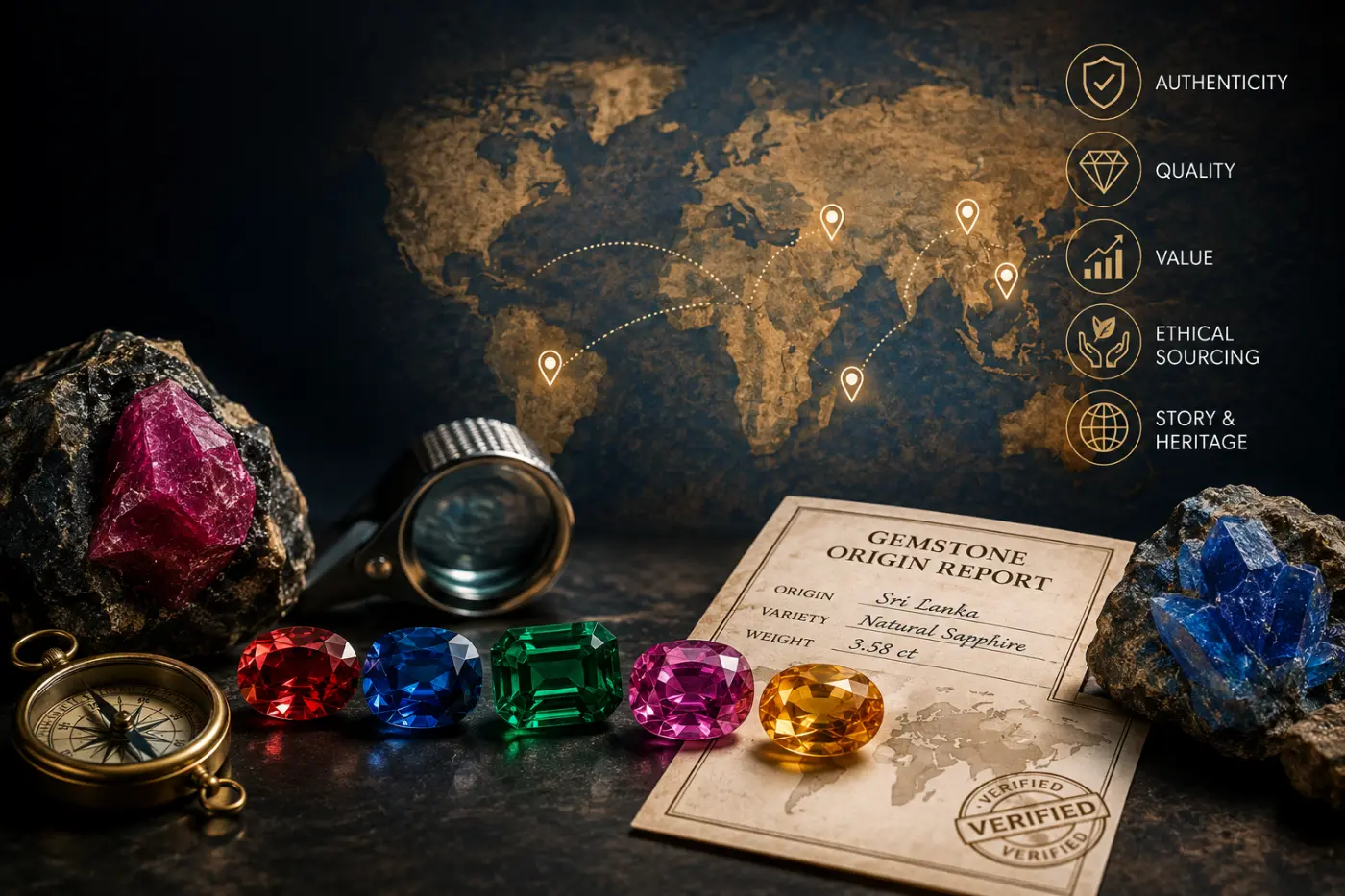
- Geographic origin (when determinable)
The purpose of precious stone certification is to provide transparency and protect buyers from fraud, misrepresentation, and counterfeit stones.
Unlike a simple appraisal, gemstone certification focuses on scientific examination and objective analysis rather than monetary value.
Why Gemstone Certification Matters
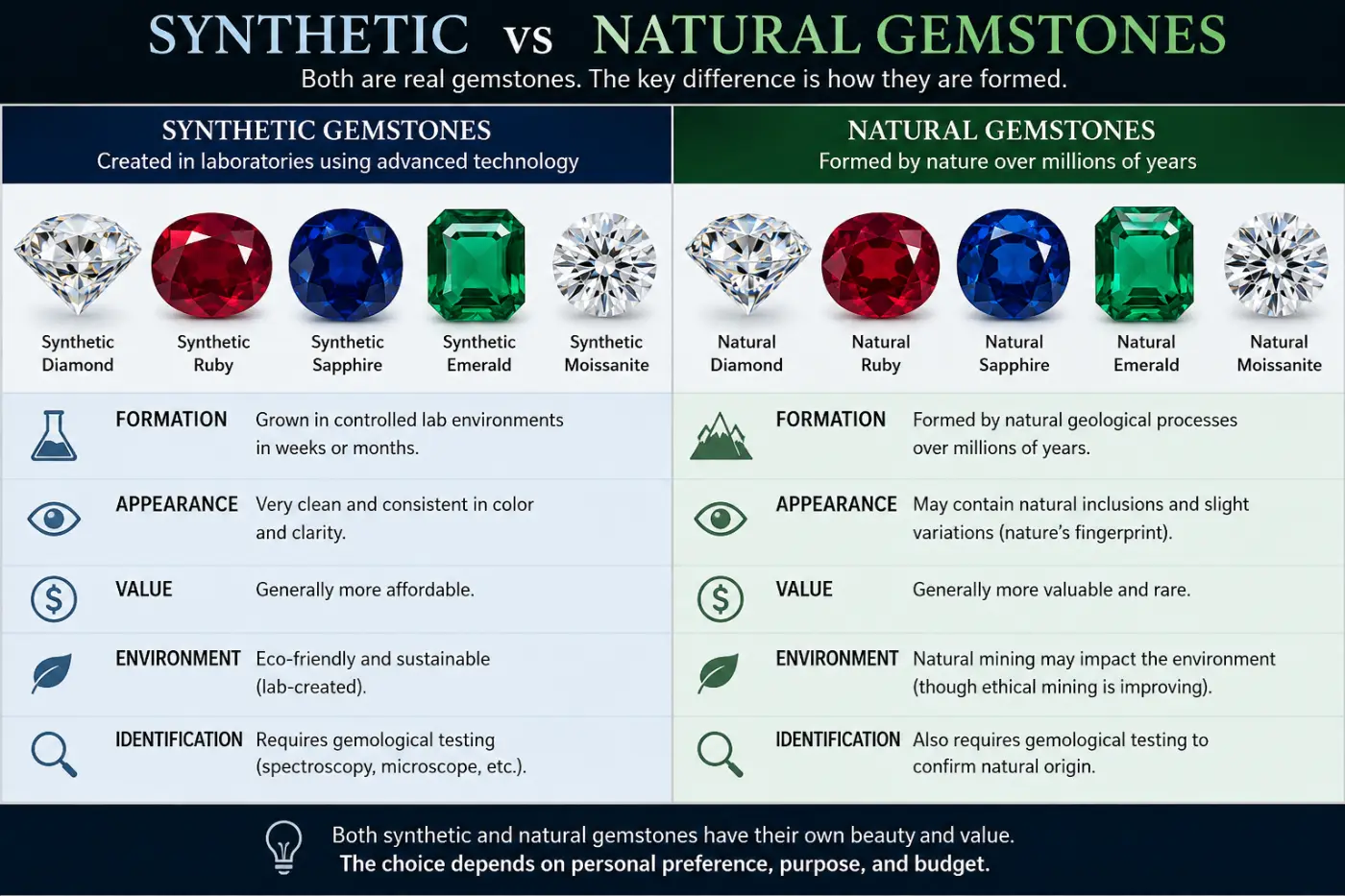
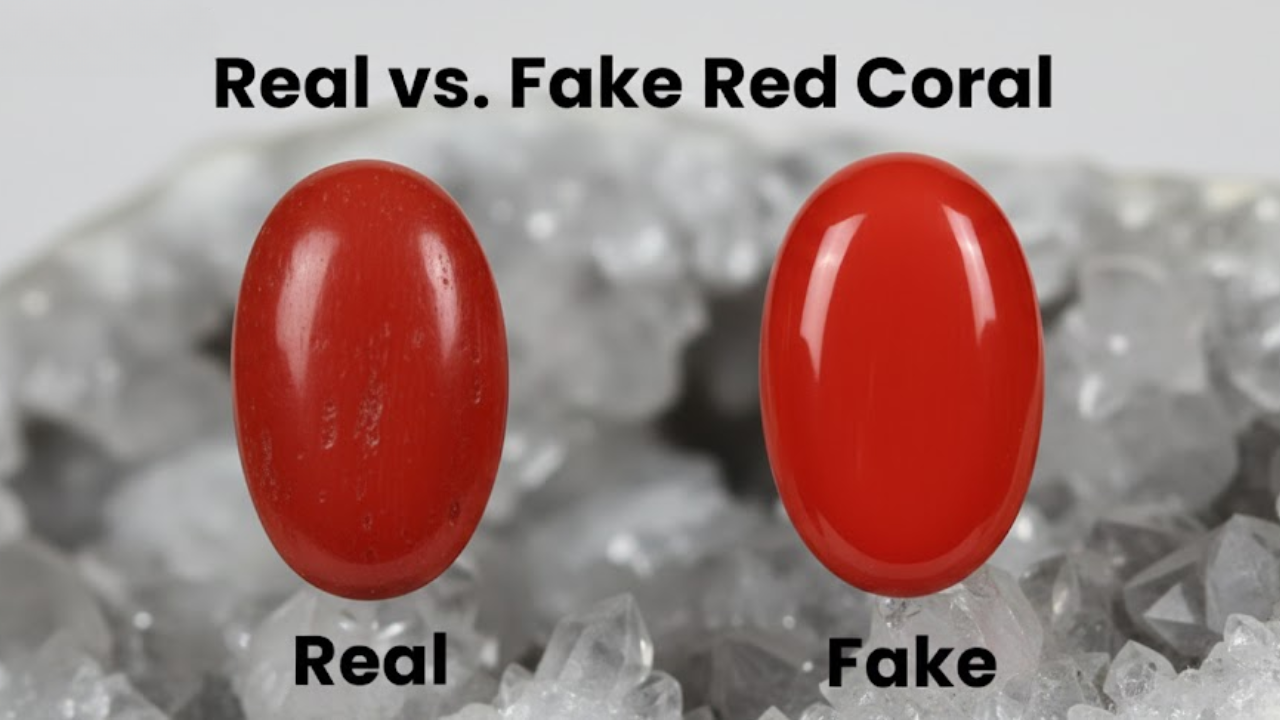
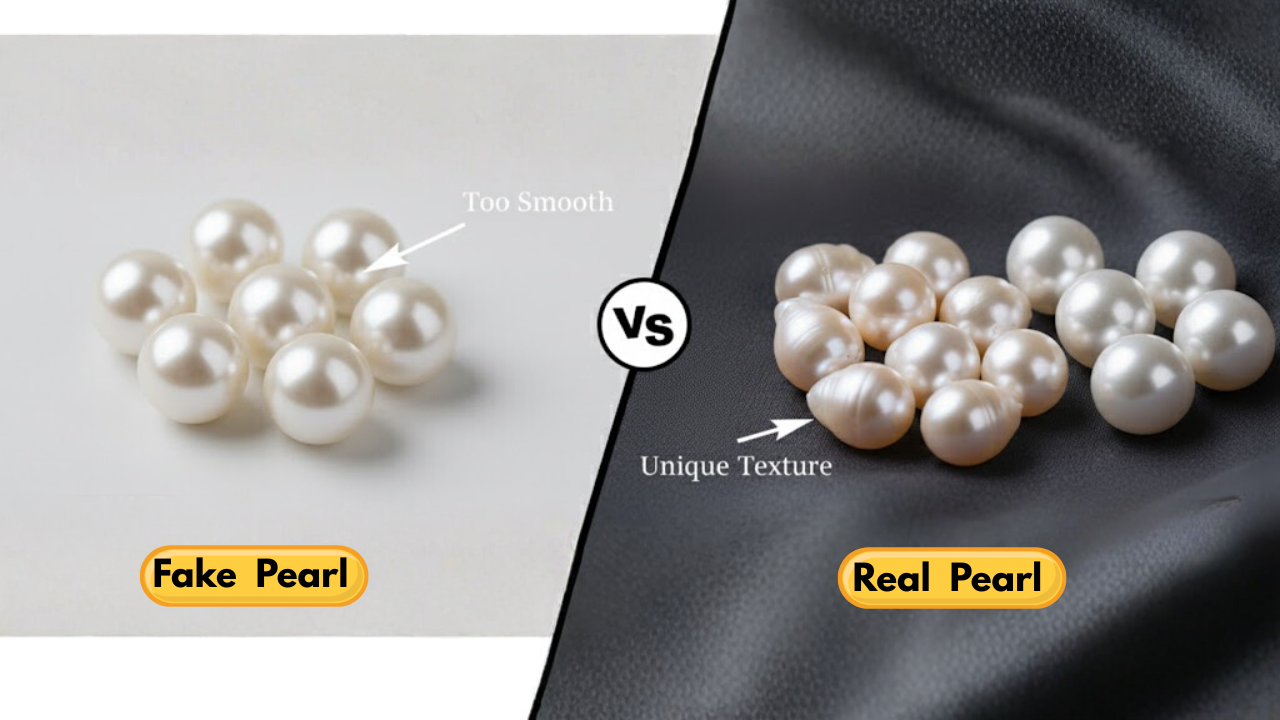
The gemstone market contains natural stones, synthetic stones, treated gems, and imitations. To the untrained eye, many of these may appear identical.
A professional certification helps:
Verify Authenticity
One of the primary goals of gemstone authenticity testing is to confirm whether a gemstone is natural, synthetic, or an imitation.
Increase Buyer Confidence
Consumers feel more secure purchasing certified gemstones because they have documented proof of quality and authenticity.
Ensure Fair Pricing
A gemstone's value depends heavily on its quality characteristics. Proper gemstone grading ensures buyers pay an appropriate price based on verified attributes.
Facilitate Resale and Insurance
Certified stones are easier to insure, resell, and trade because their characteristics have already been professionally documented.
Protect Against Fraud
Certification helps prevent deceptive practices such as undisclosed treatments or misidentification of gemstone species.
The Role of Gemstone Certification Labs
Professional gemstone certification labs act as independent authorities within the gemstone industry. Their role is to provide unbiased evaluations based on scientific methods rather than commercial interests.
These laboratories employ trained gemologists who use specialized instruments to analyze gemstones under controlled conditions.
The responsibilities of a laboratory include:
- Gem identification
- Treatment detection
- Origin determination
- Quality assessment
- Documentation and reporting
- Authentication of rare stones
Because laboratory findings significantly influence a gemstone's value, accuracy and consistency are critical.
The Gemstone Testing Process
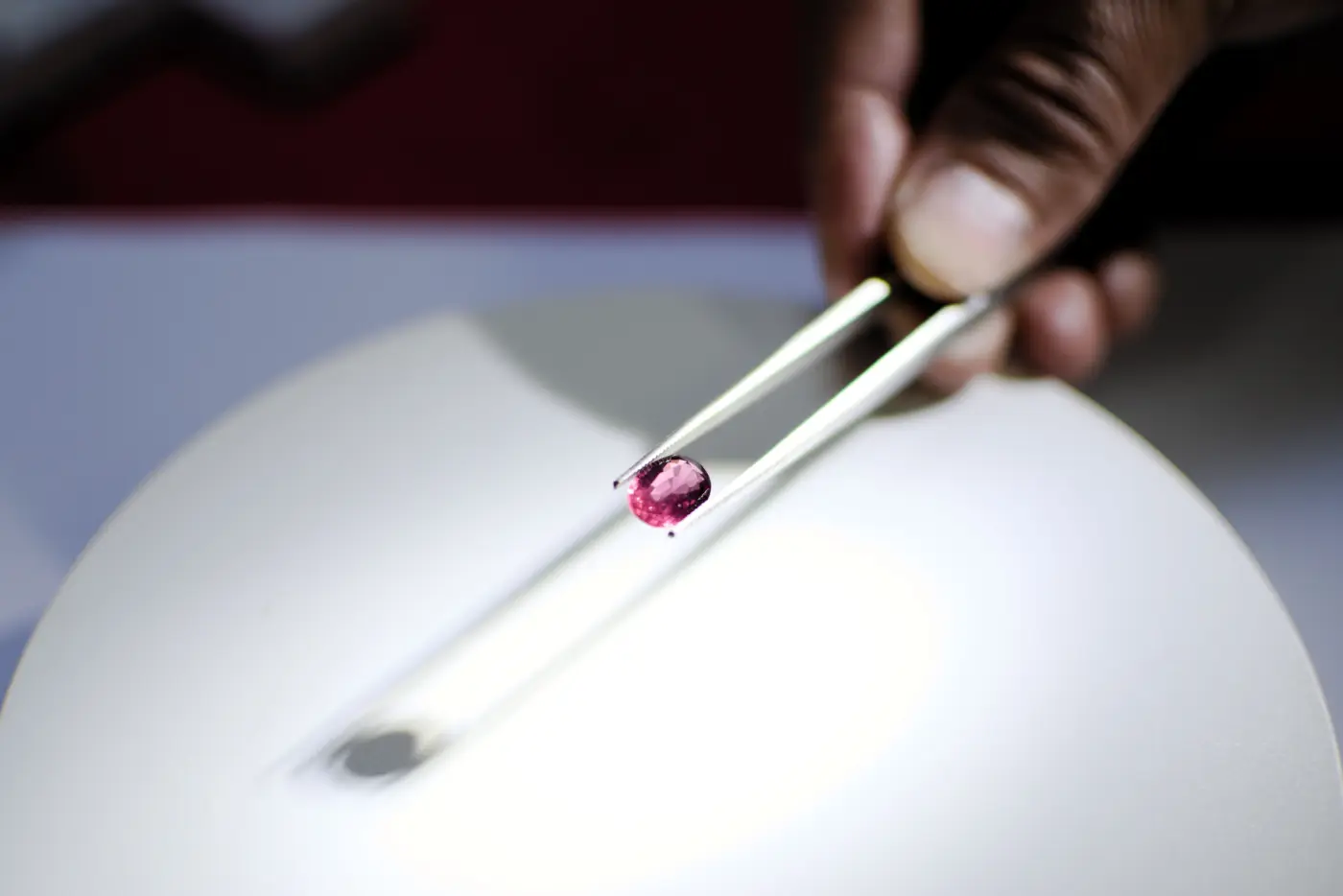
The process of gemstone testing involves multiple stages. Each stage helps gemologists gather information about the stone's physical and optical properties.
Step 1: Initial Visual Inspection
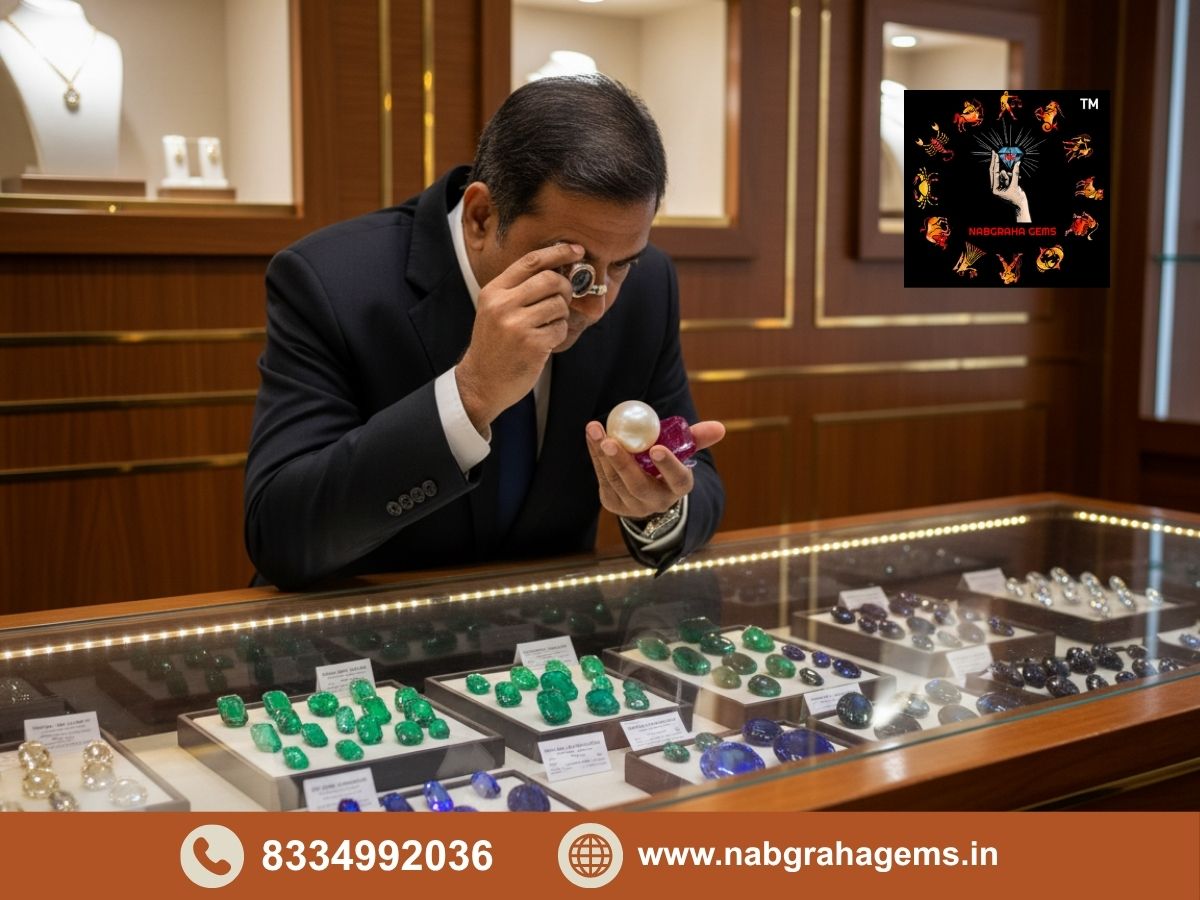
The examination begins with a detailed visual inspection.
Gemologists assess:
- Shape and cut
- Transparency
- Surface condition
- Visible inclusions
- Color distribution
This preliminary review provides clues about the gemstone's identity and possible treatments.
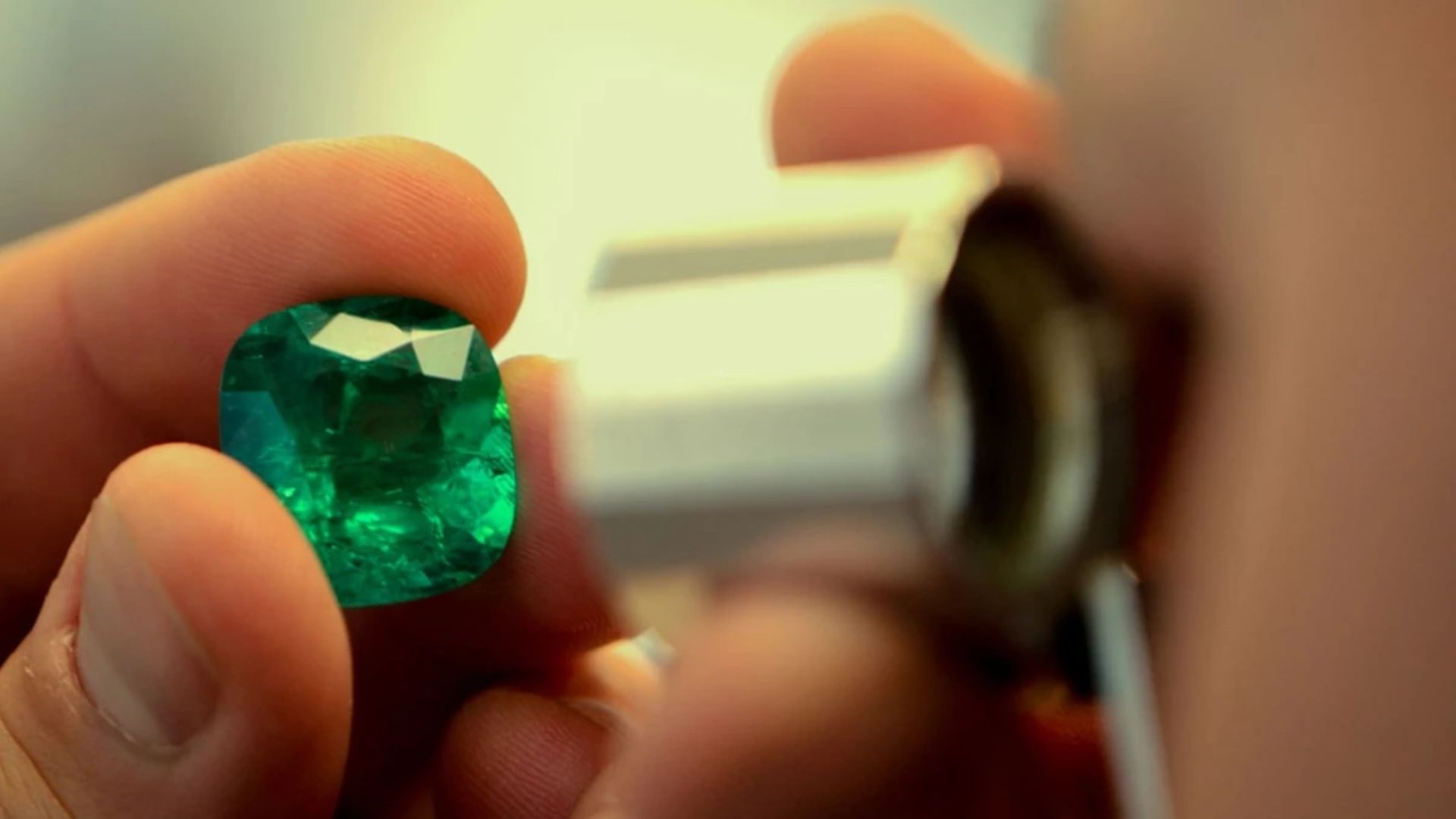
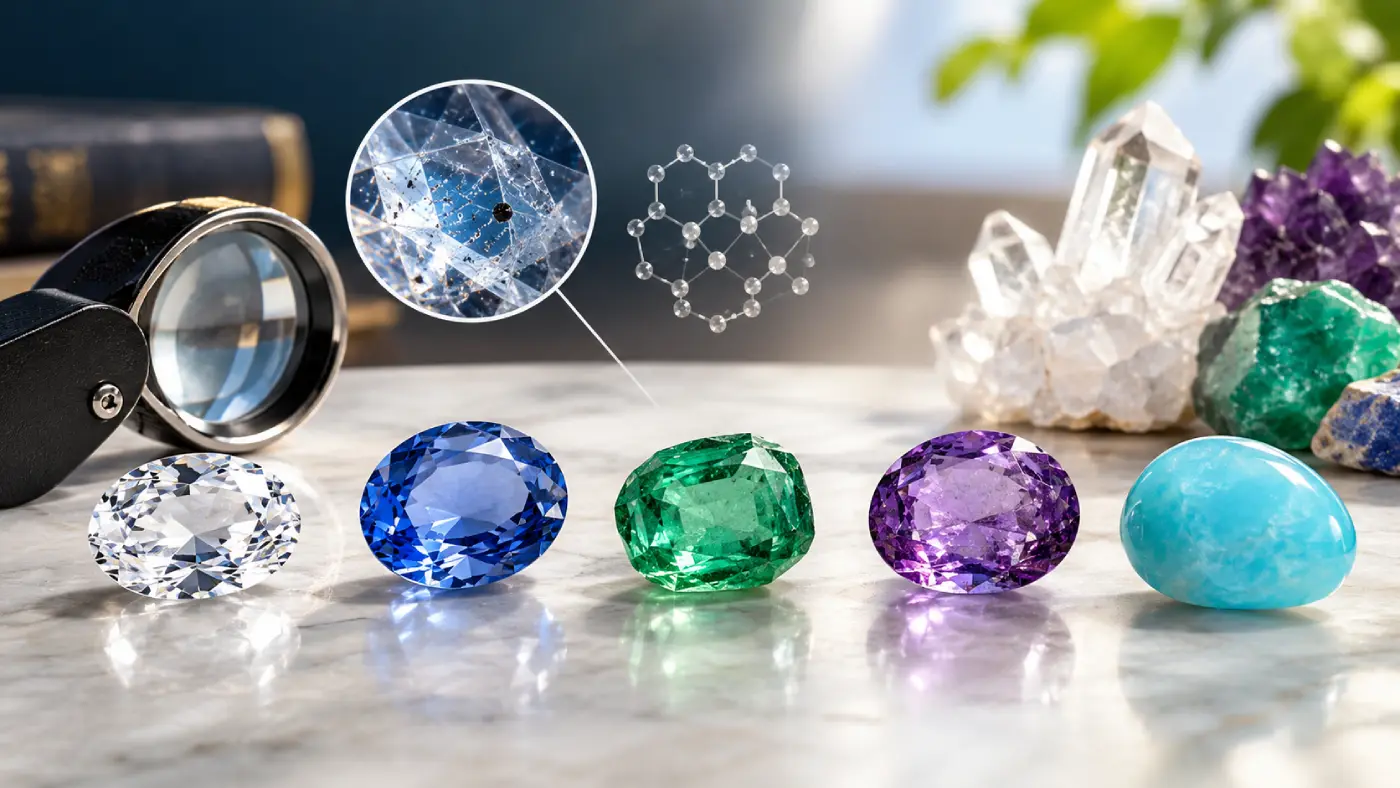
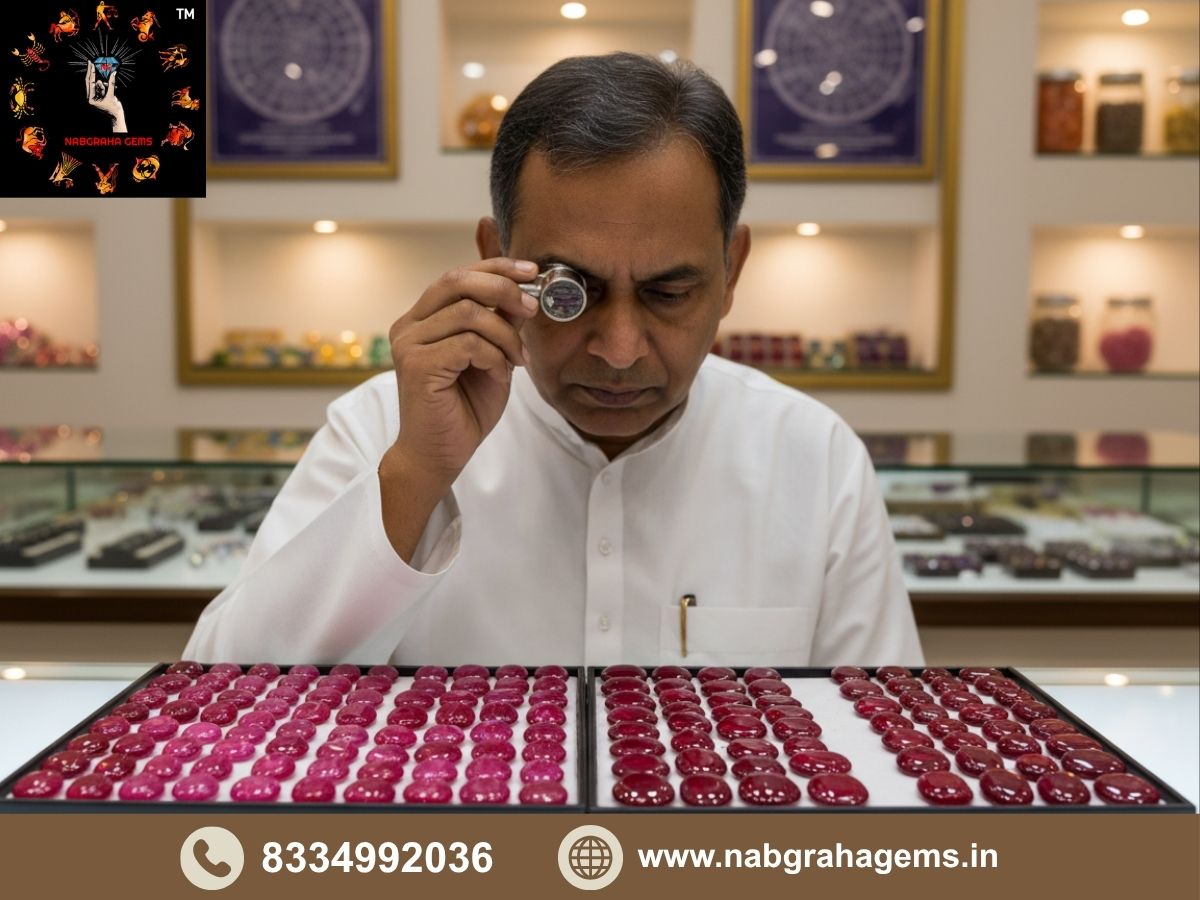
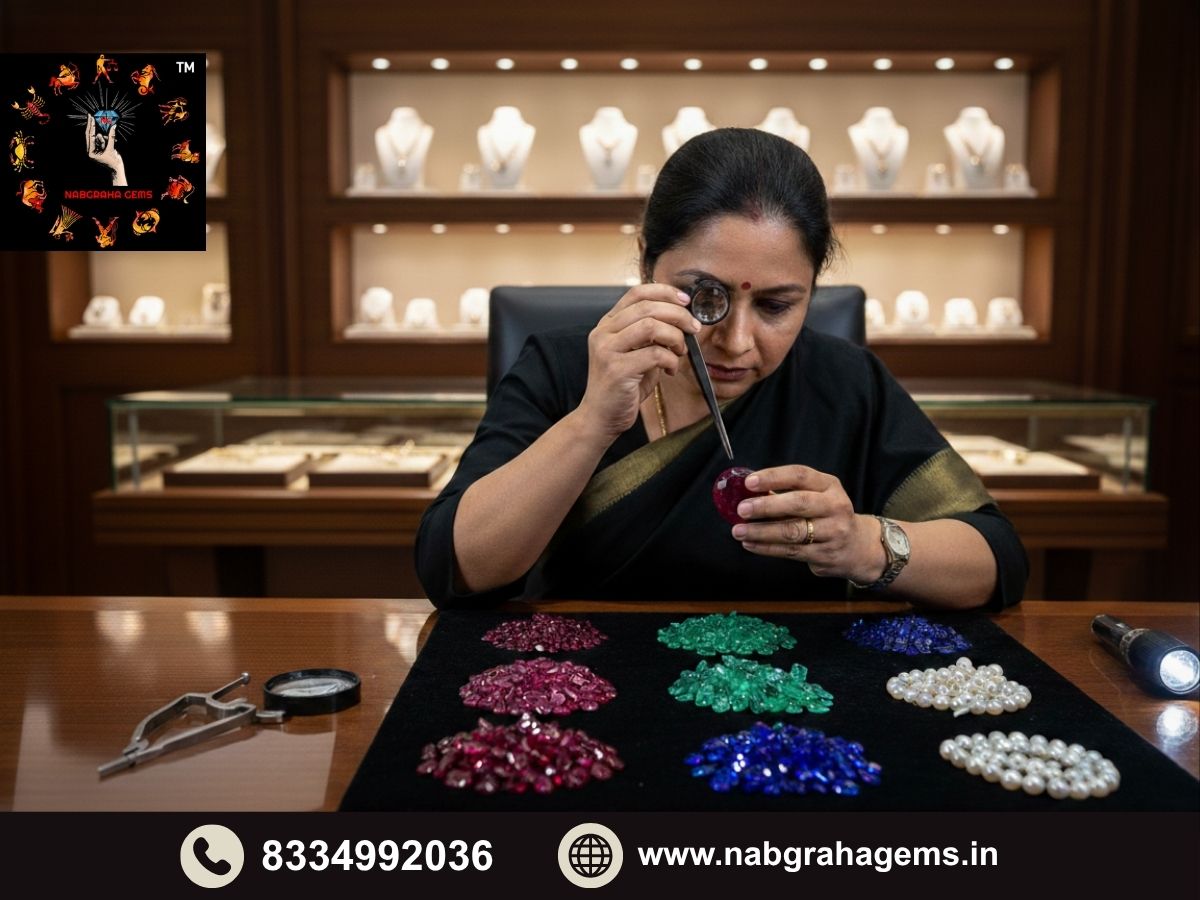
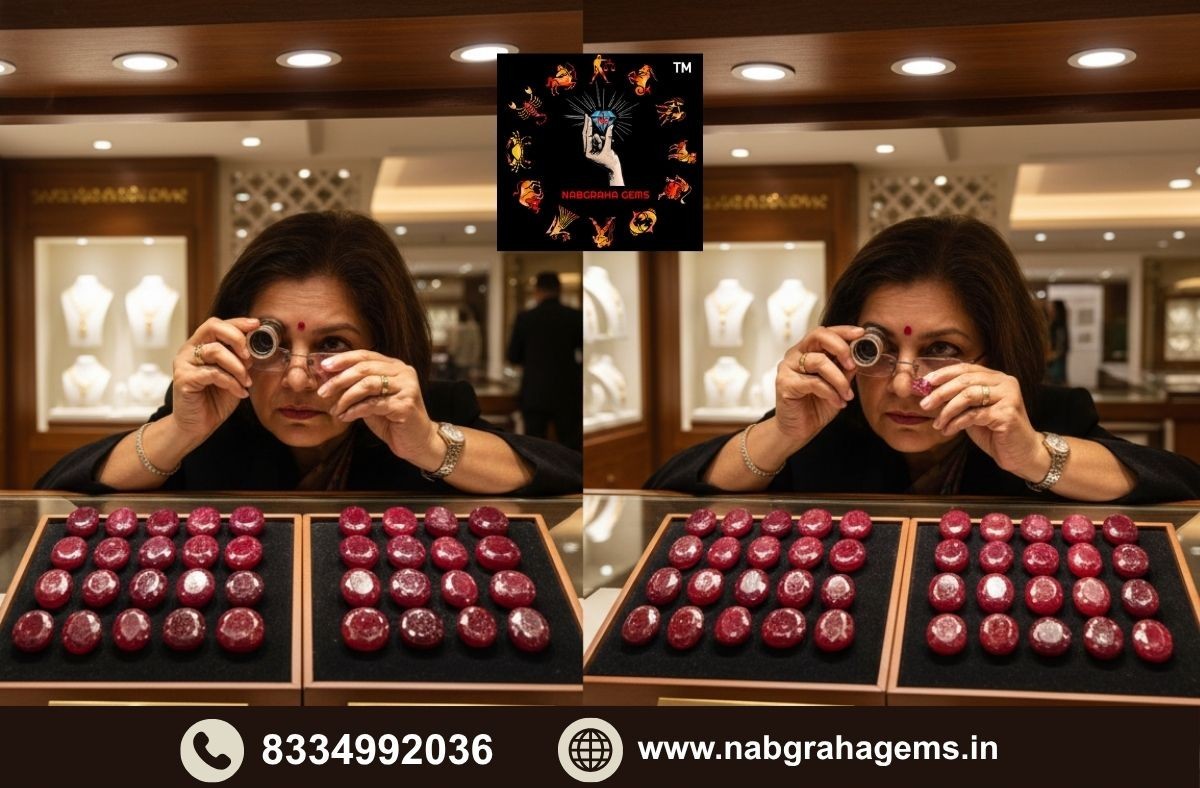
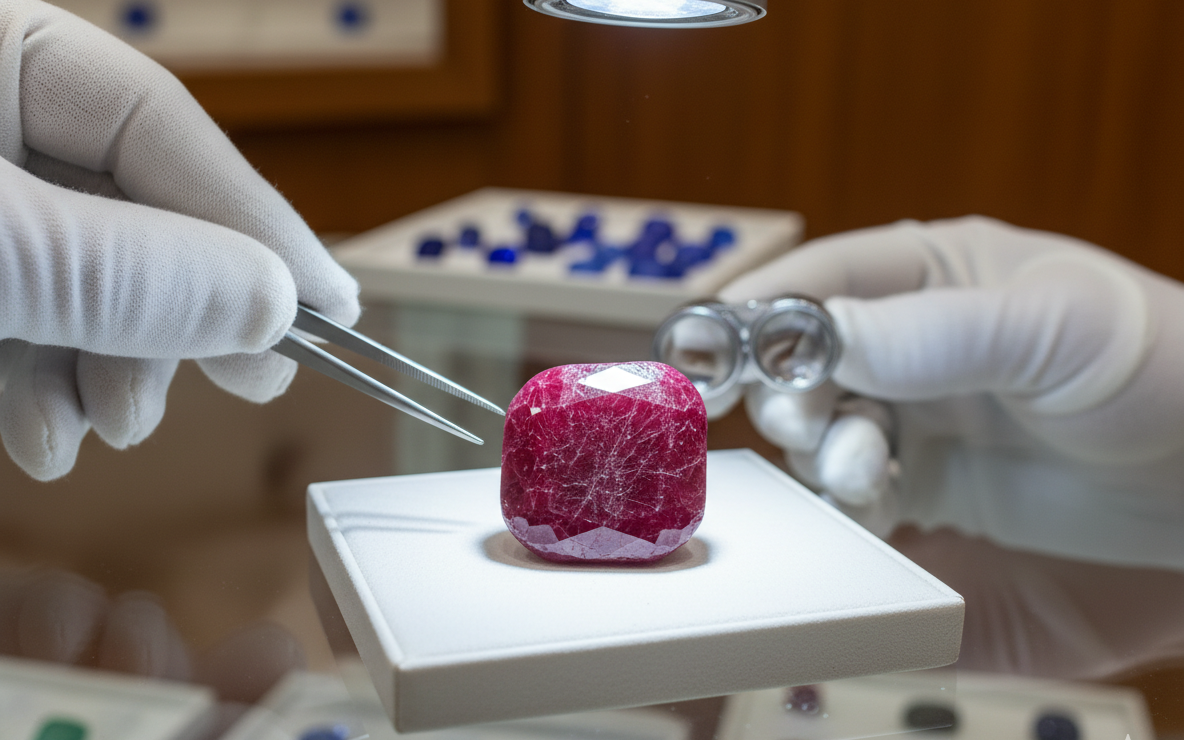
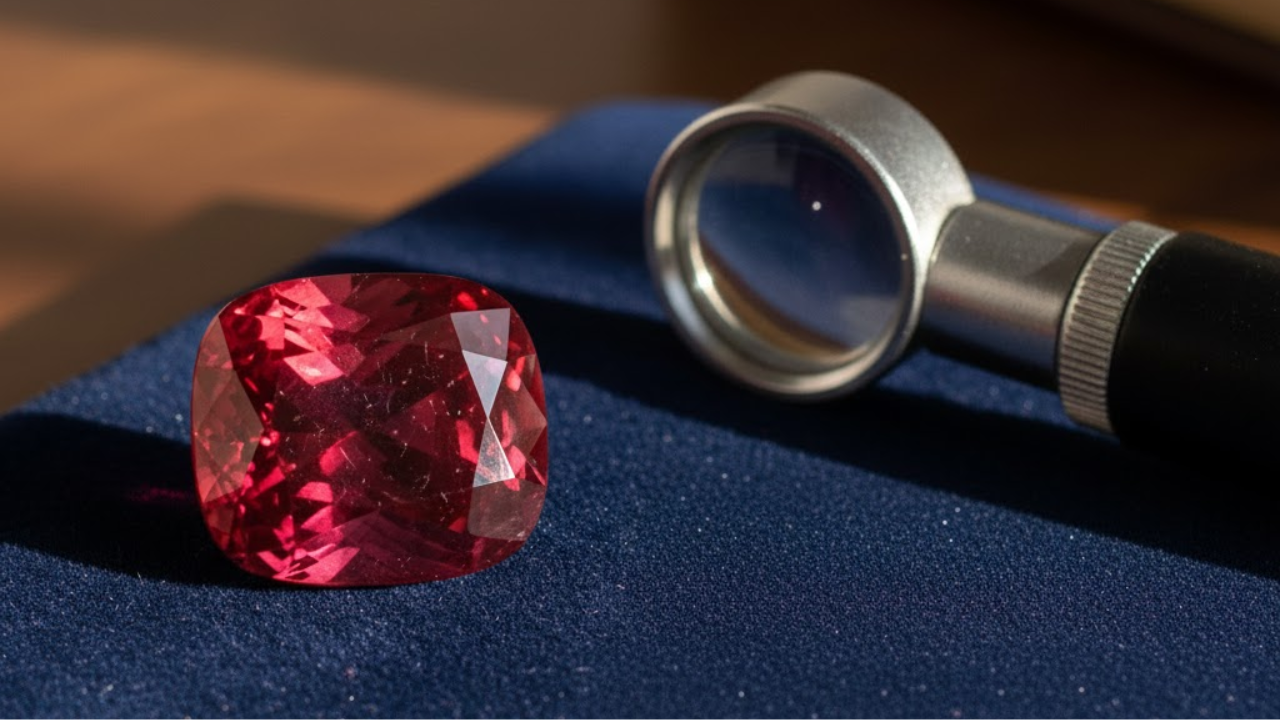
Using magnification tools such as loupes and microscopes, experts can identify internal characteristics that help distinguish natural stones from synthetic alternatives.
Step 2: Weight and Measurement Analysis
Accurate measurements are recorded using precision instruments.
Gemologists determine:
- Carat weight
- Length
- Width
- Depth
- Proportions
These measurements become part of the official gemstone grading report and help establish market value.
Step 3: Refractive Index Testing
The refractive index (RI) measures how light bends when entering a gemstone.
Different gemstones have unique refractive index ranges, making this test one of the most reliable methods of identification.
For example:
- Ruby and sapphire have specific RI values.
- Emerald exhibits a different refractive range.
- Diamond possesses a distinct refractive index.
This stage of gemstone testing helps confirm gemstone species with a high degree of accuracy.
Step 4: Spectroscopic Analysis
Spectroscopy examines how gemstones absorb and transmit light.
Using spectroscopes, gemologists identify:
- Trace elements
- Chemical composition
- Color-causing agents
Certain absorption patterns act like fingerprints, helping experts determine gemstone identity and detect treatments.
Spectroscopic analysis is especially useful for advanced gemstone authenticity testing.
Step 5: Microscopic Examination
Microscopic analysis is one of the most important procedures in gemstone certification.
Under high magnification, gemologists study:
- Internal inclusions
- Growth structures
- Fractures
- Mineral crystals
- Fluid inclusions
Natural gemstones often contain distinctive inclusions formed during geological growth. Synthetic gemstones may display different growth patterns or manufacturing indicators.
This examination plays a key role in distinguishing natural stones from laboratory-created alternatives.
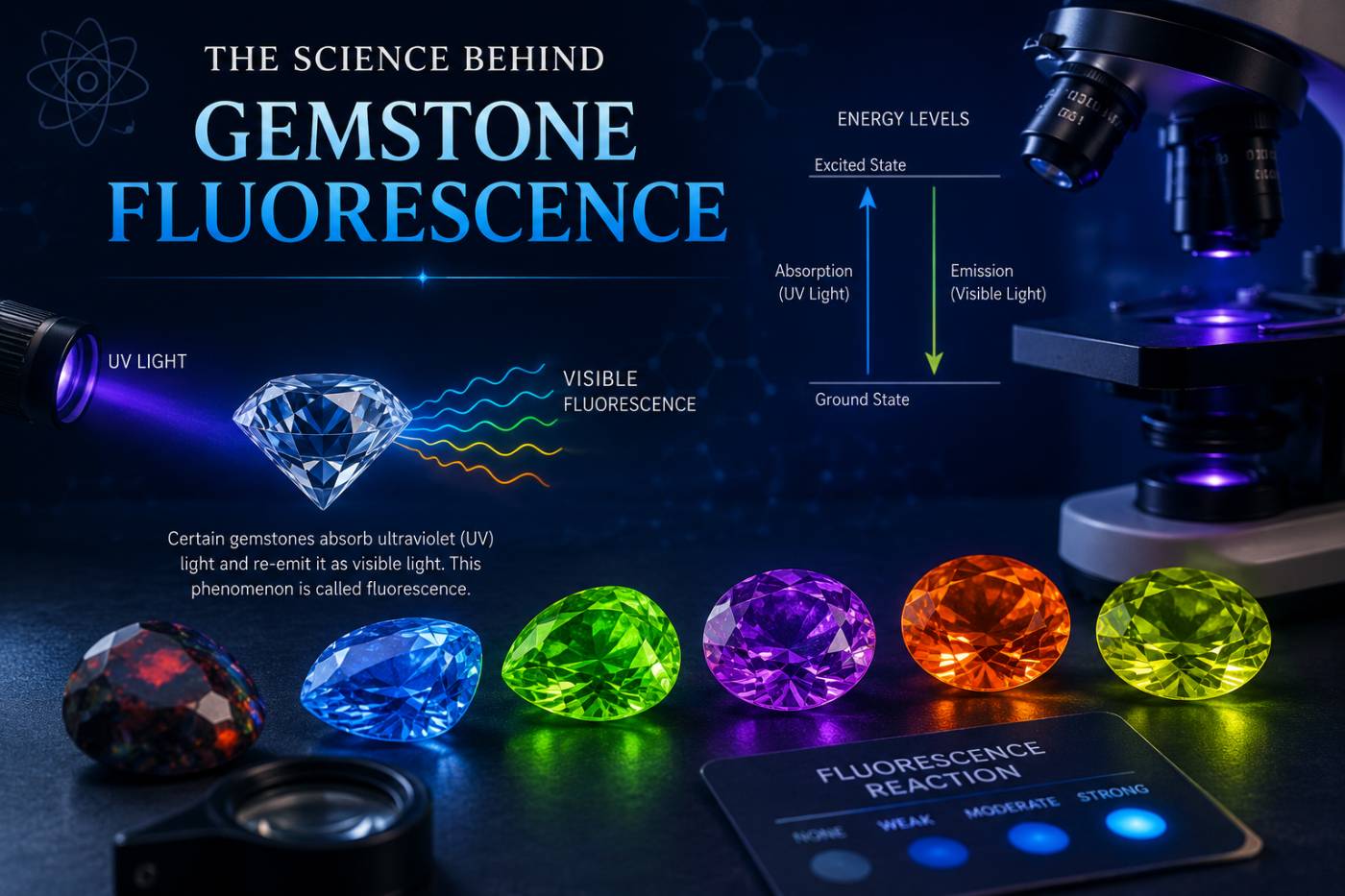
Step 6: Fluorescence Testing
Some gemstones react to ultraviolet (UV) light by emitting visible fluorescence.
Gemologists expose gemstones to UV radiation and observe:
- Color reactions
- Intensity levels
- Fluorescence patterns
These observations assist in gemstone identification and treatment detection.
Fluorescence can also provide valuable clues about geographic origin in certain cases.
Step 7: Advanced Laboratory Analysis
Modern gemstone certification labs often employ highly sophisticated equipment.
Advanced tools may include:
- Raman spectroscopy
- Fourier-transform infrared spectroscopy (FTIR)
- Laser ablation systems
- X-ray fluorescence (XRF)
- UV-Visible spectrometers
These technologies allow laboratories to perform highly precise gemstone authenticity testing and identify subtle treatments that may not be visible under traditional examination.
Detecting Gemstone Treatments
Many gemstones undergo treatments to enhance appearance.
Common treatments include:
Heat Treatment
Heat improves color and clarity in gemstones such as sapphires and rubies.
Fracture Filling
Glass or resin may be used to fill fractures and improve transparency.
Dyeing
Some gemstones are dyed to enhance color.
Irradiation
Exposure to radiation can alter gemstone color.
Surface Coating
Thin coatings may be applied to modify appearance.
A reputable gemological laboratory carefully evaluates gemstones for these treatments and discloses findings in the certification report.
Treatment disclosure is essential because treated stones typically have different market values than untreated specimens.
Understanding Gemstone Grading
After identity and authenticity are established, laboratories perform gemstone grading to assess quality.
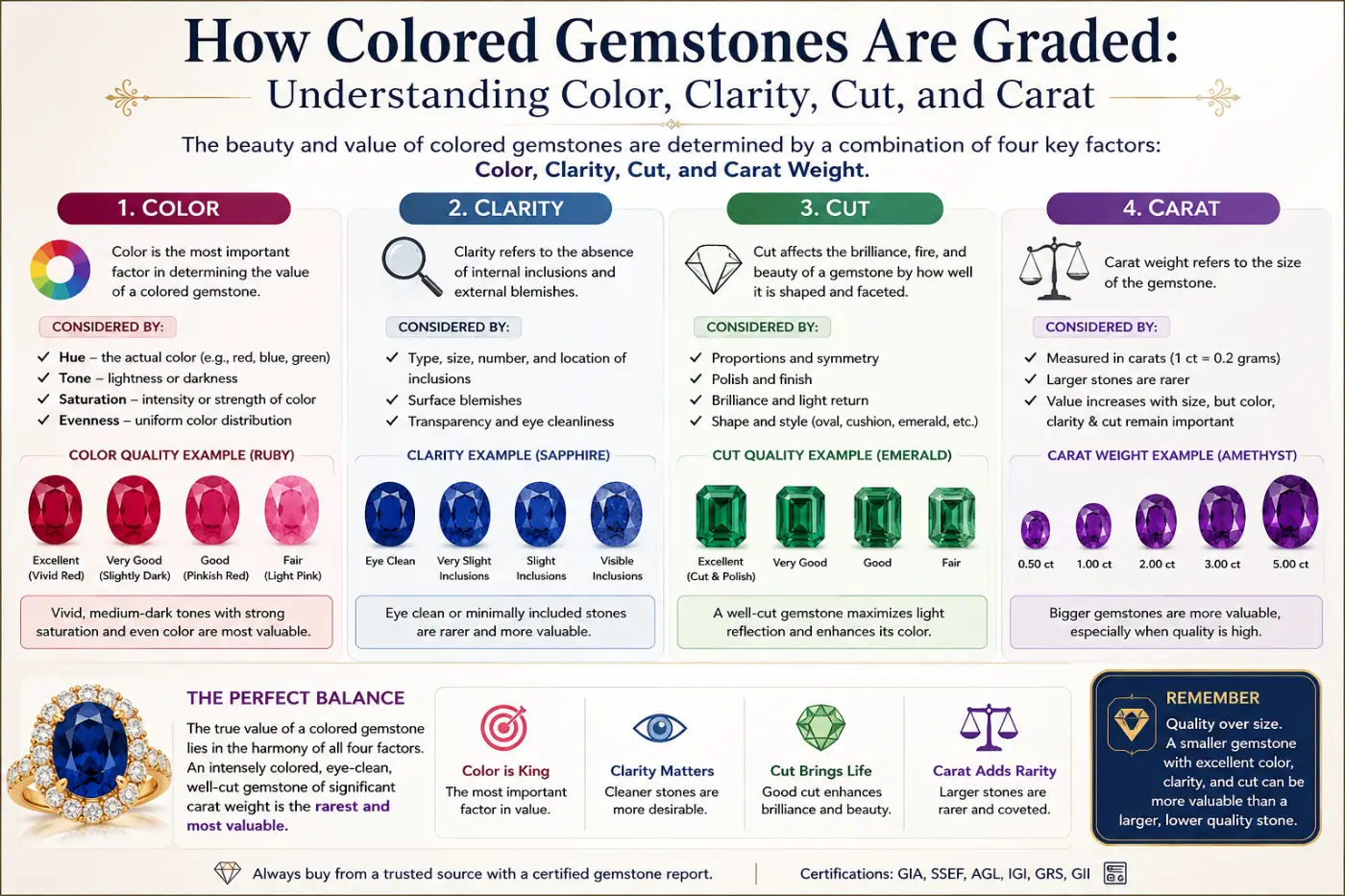
Unlike diamonds, colored gemstones do not follow a universally standardized grading system. However, most laboratories evaluate several key factors.
Color
Color is often the most important factor in gemstone quality grading.
Gemologists assess:
- Hue
- Tone
- Saturation
The most valuable gemstones usually exhibit vivid, evenly distributed color.
For example:
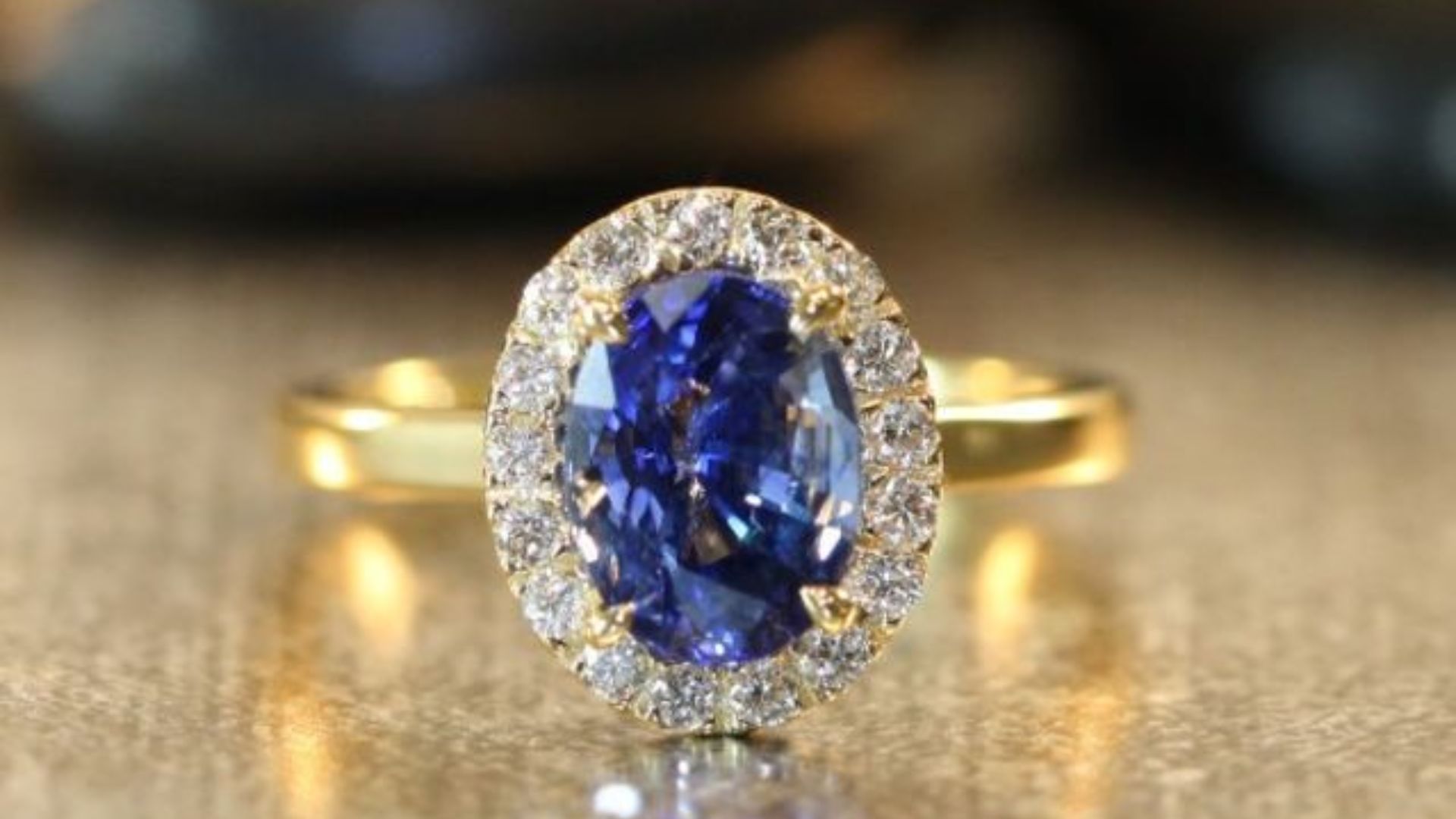
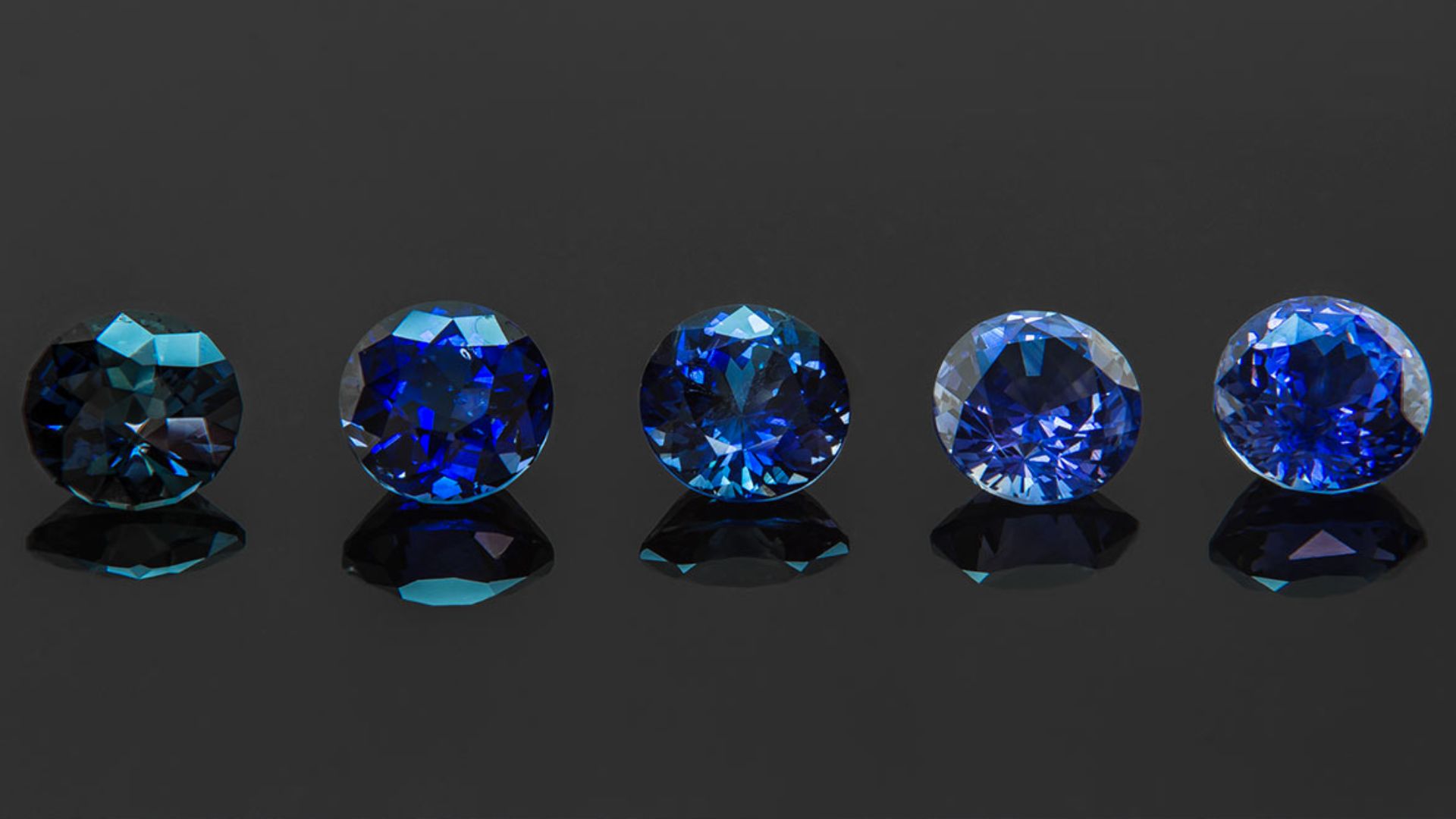
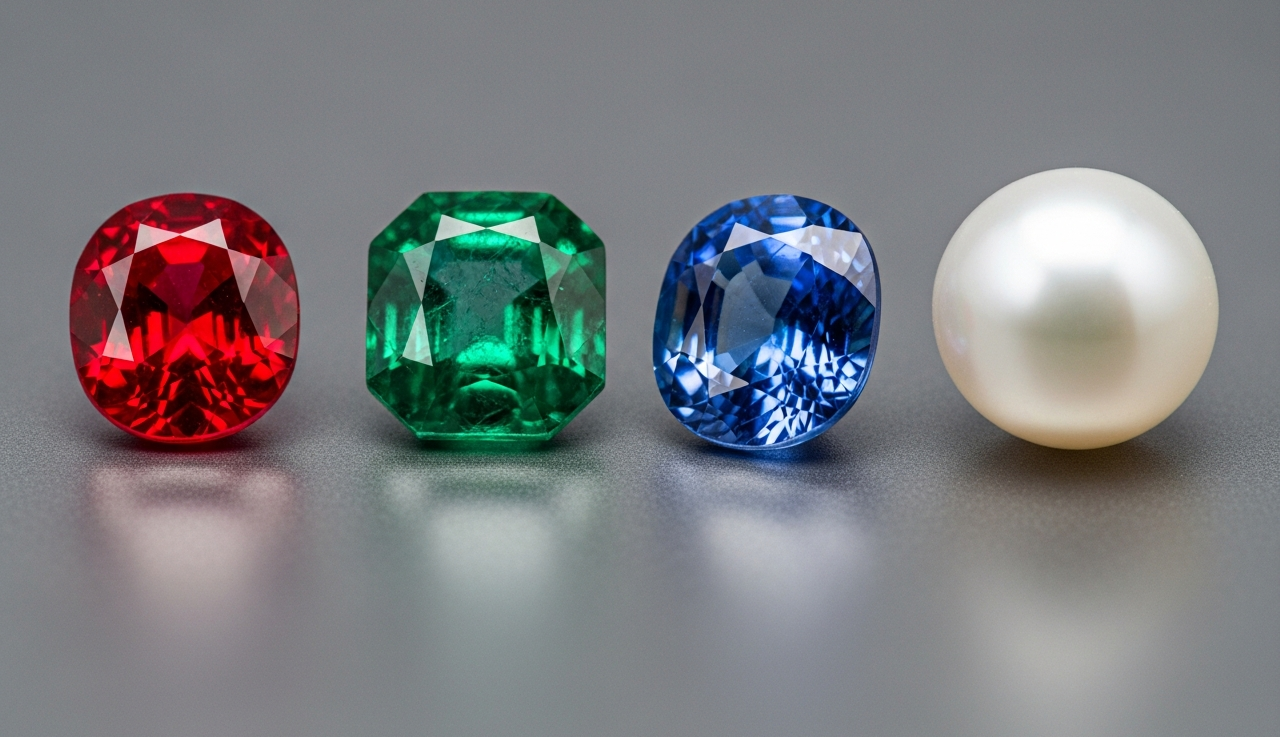
- Deep royal blue sapphires
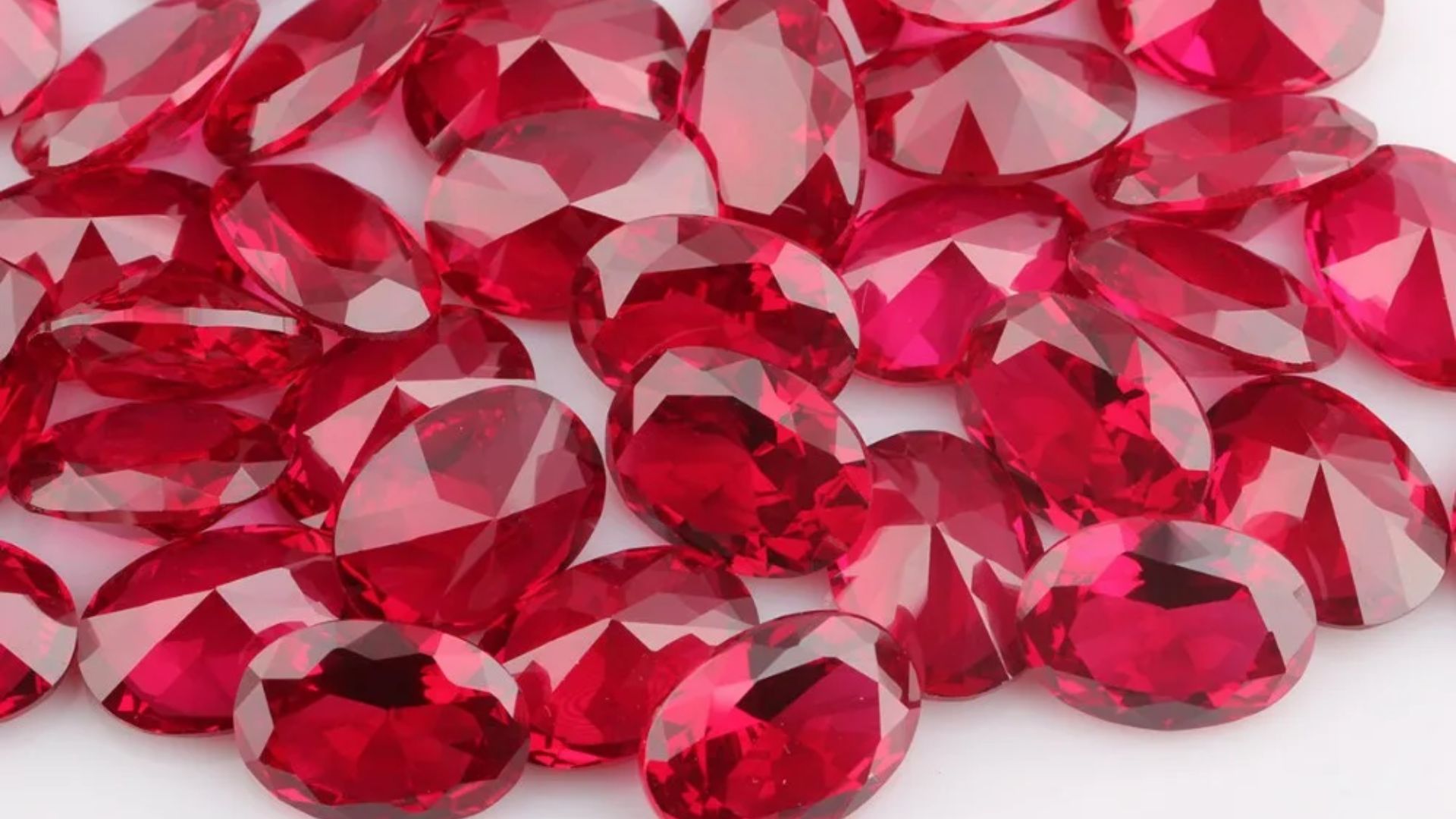
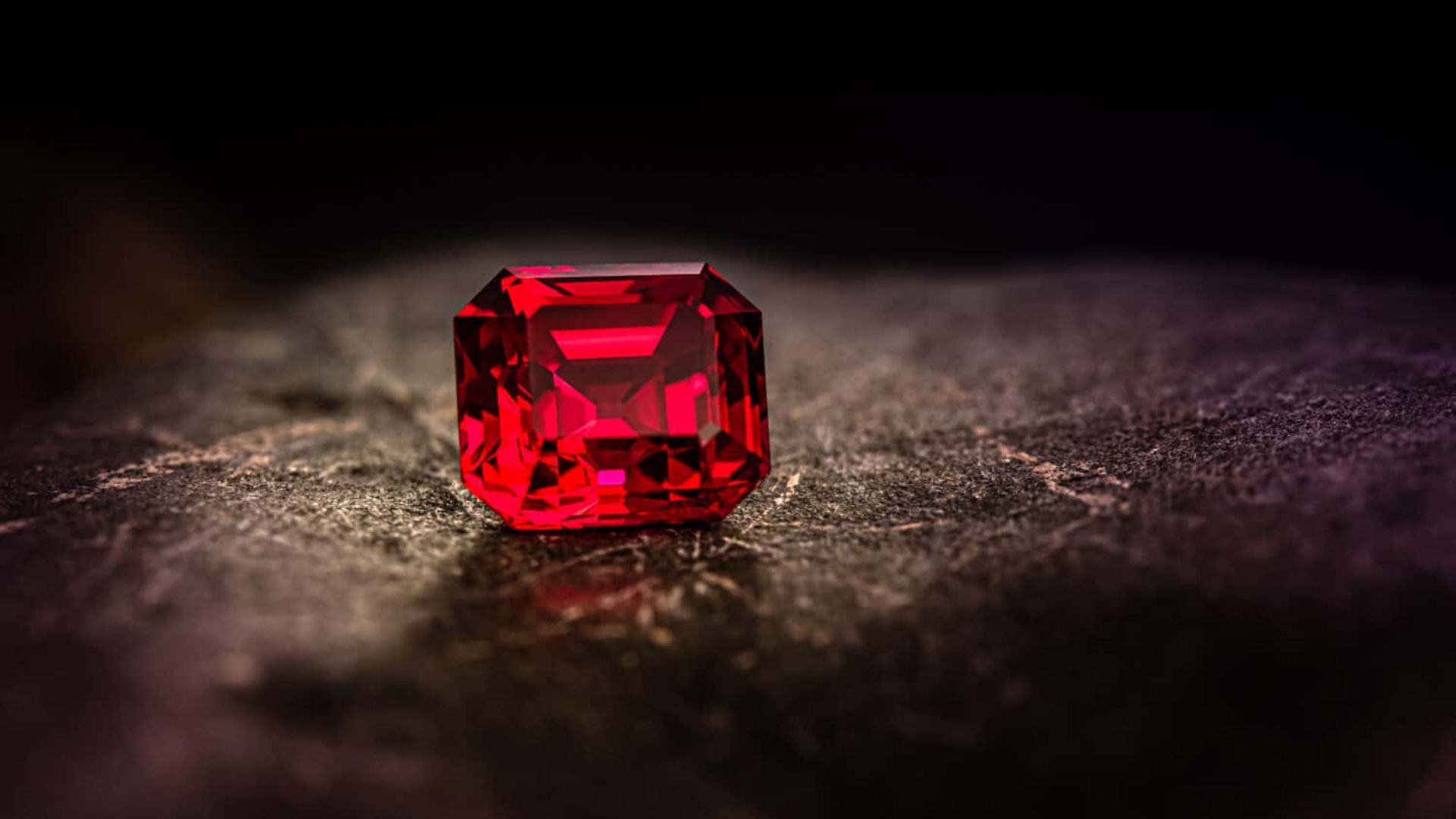
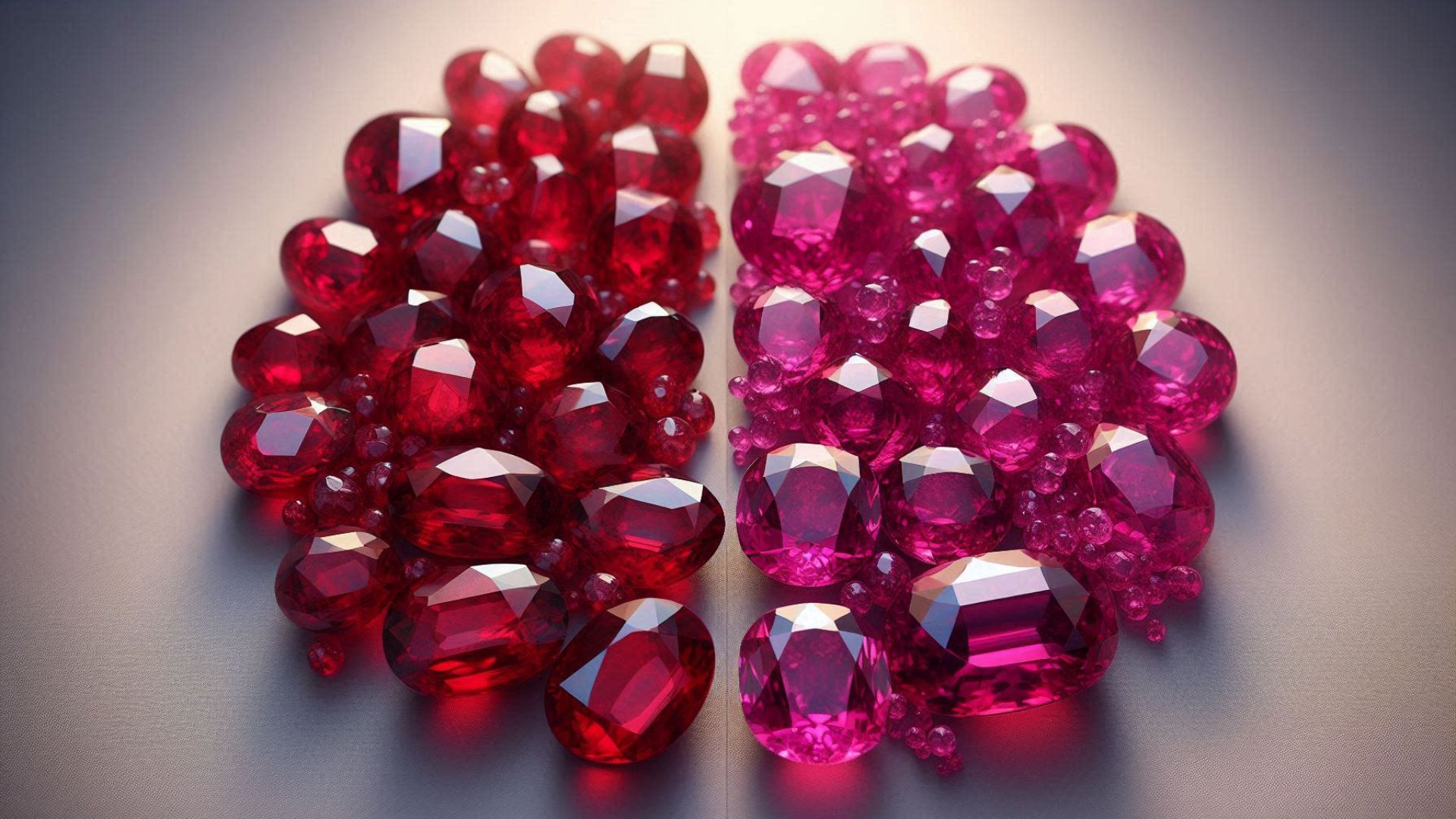
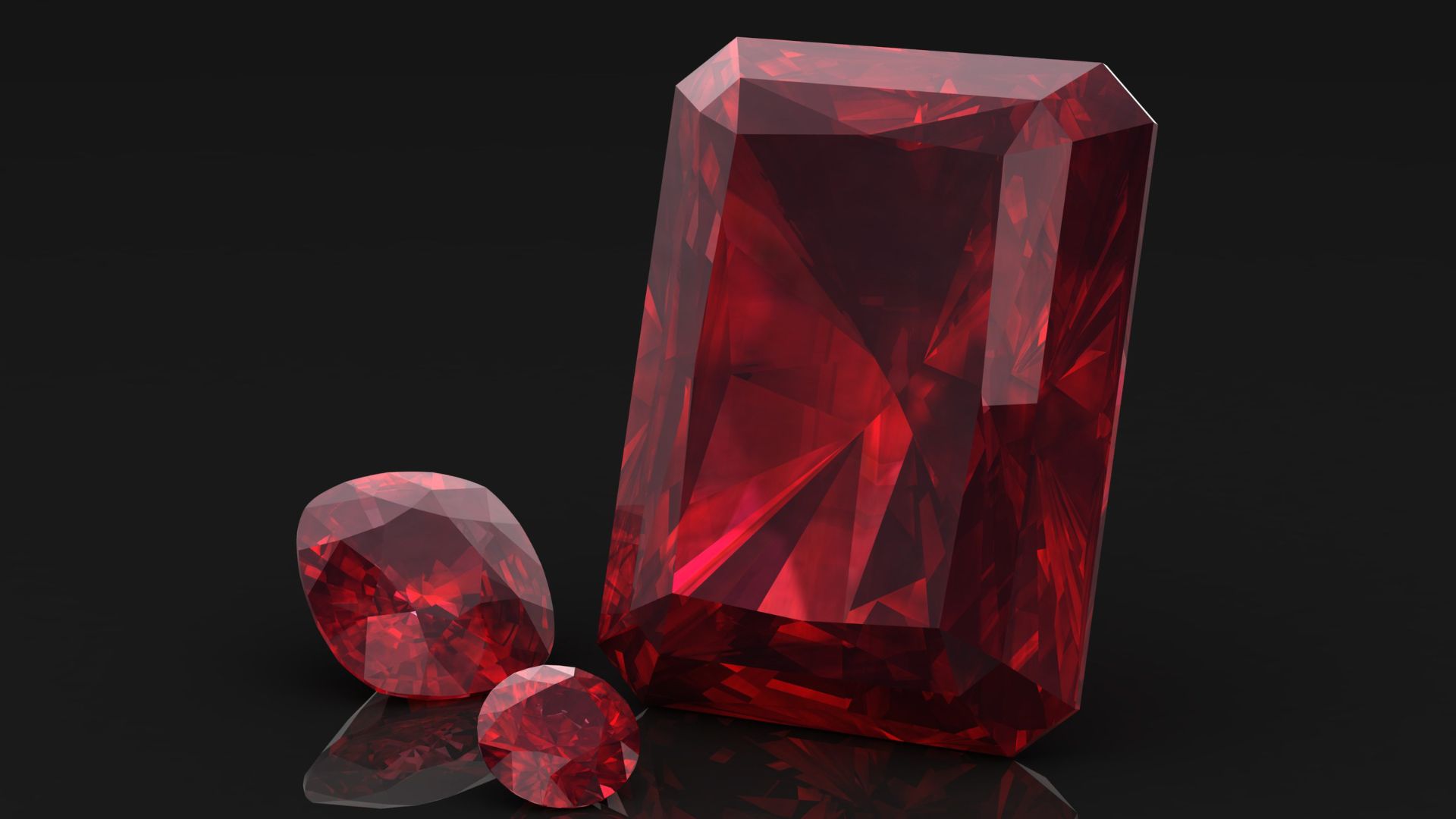
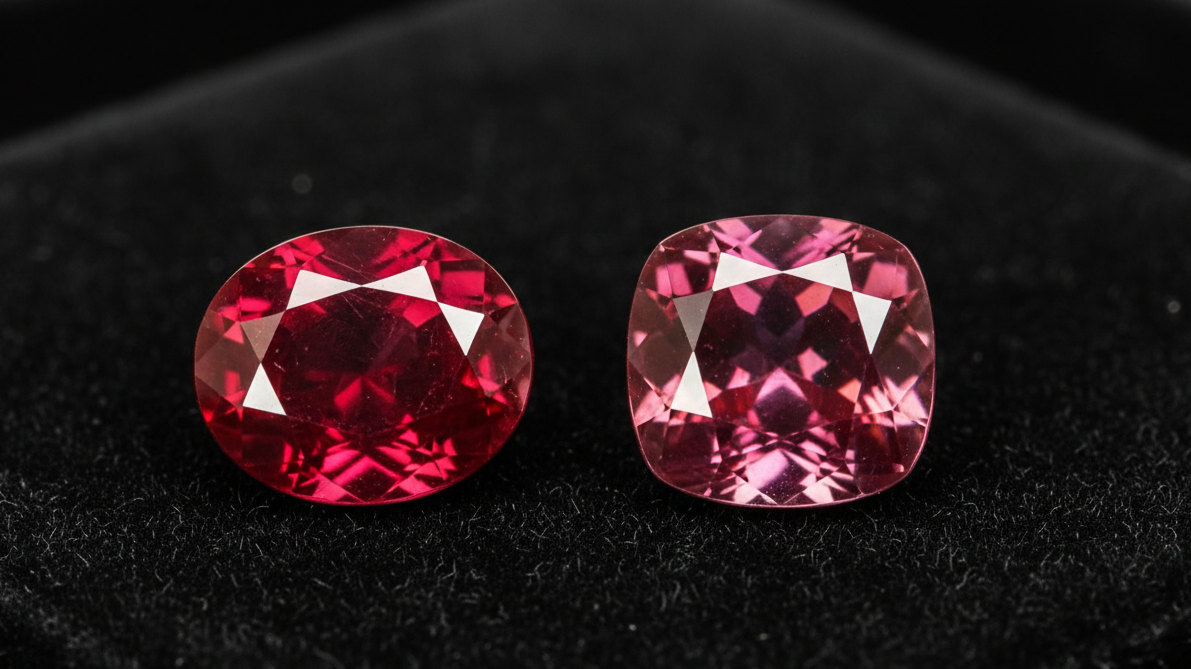
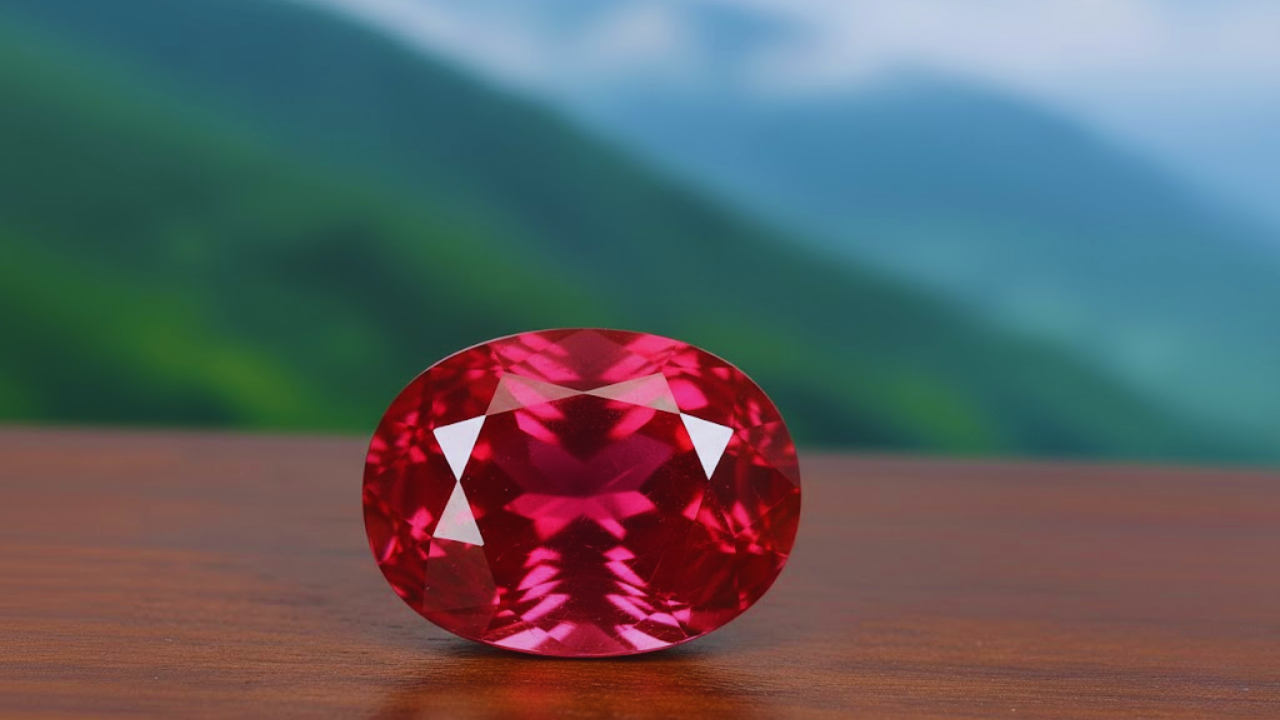
- Rich pigeon-blood red rubies
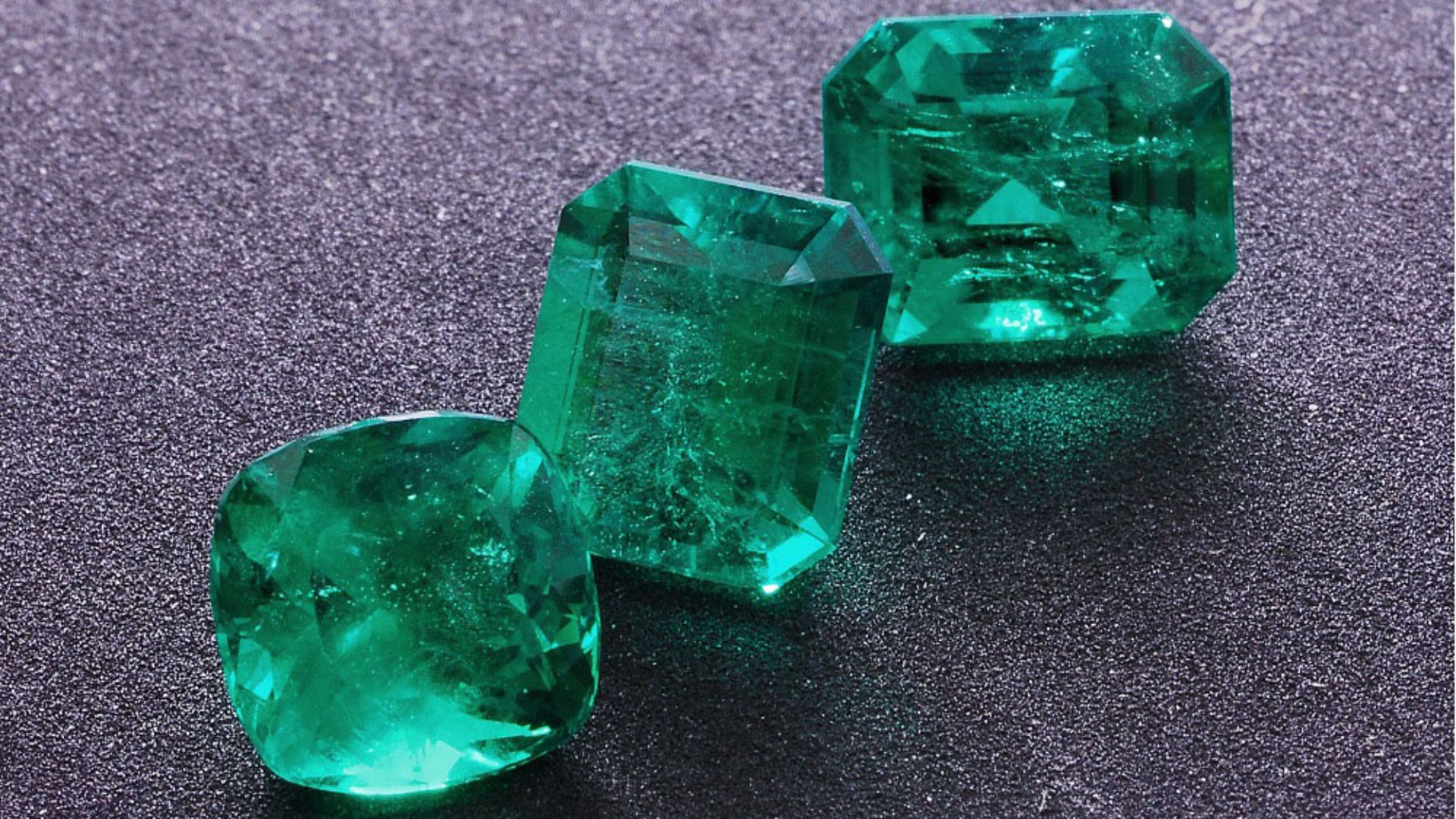
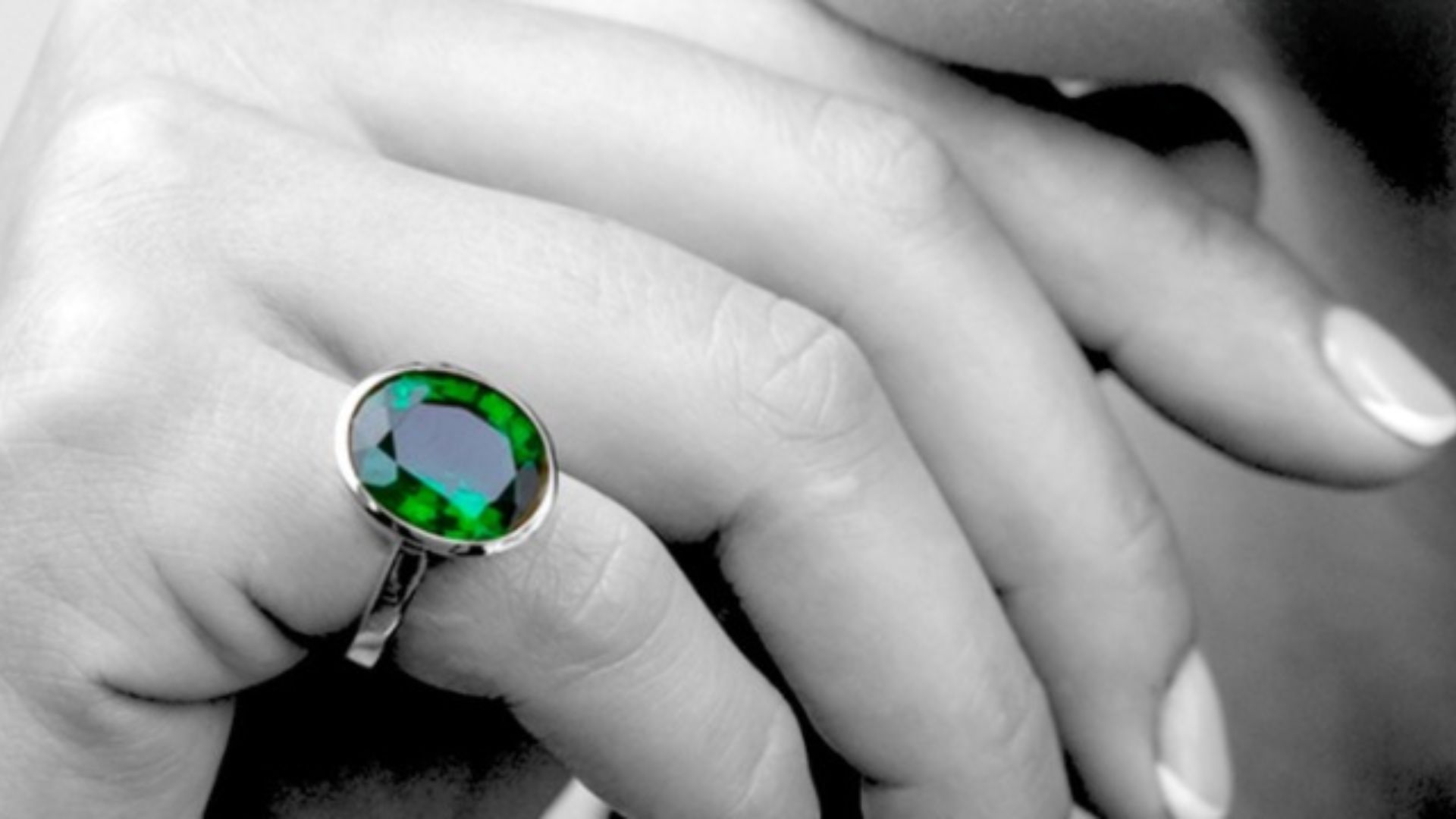
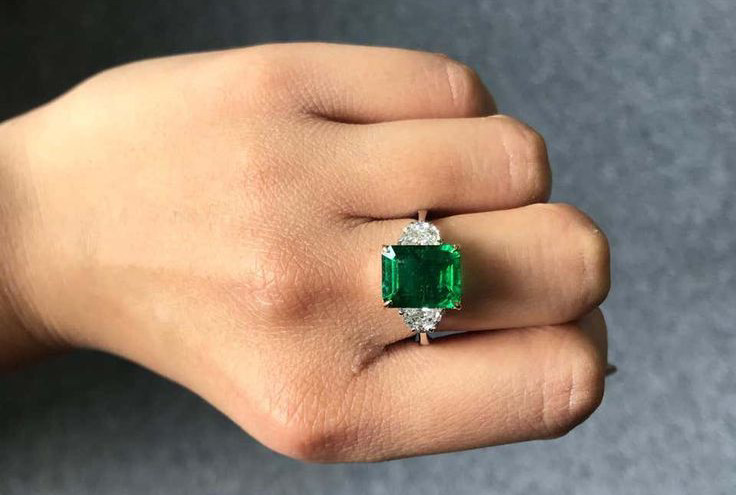
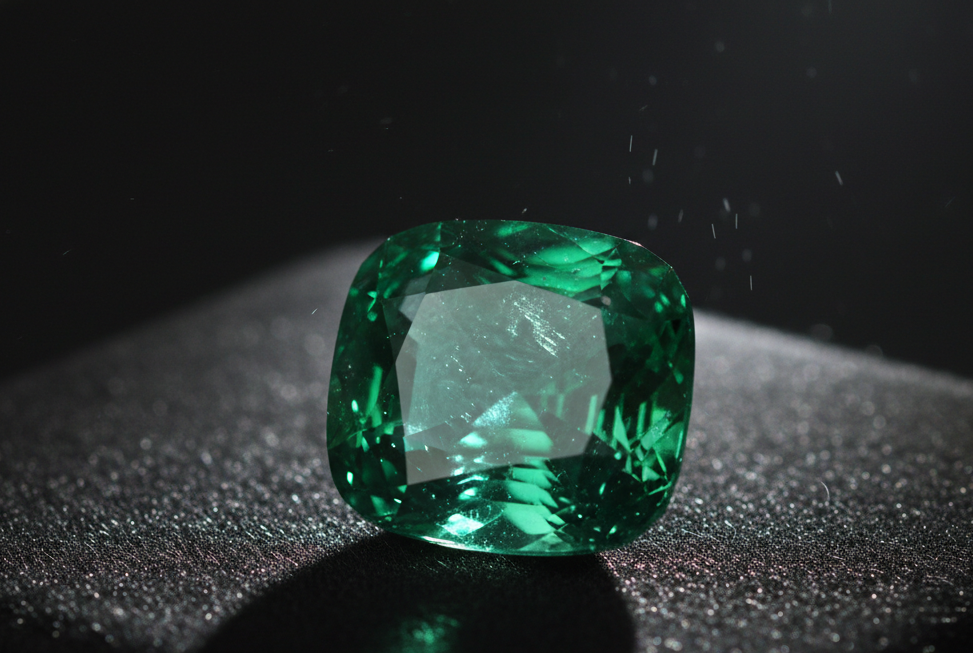
- Vibrant green emeralds
Exceptional color significantly increases value.
Clarity
Clarity refers to the presence or absence of internal inclusions and surface blemishes.
Gemologists examine:
- Inclusion size
- Inclusion type
- Inclusion location
- Visibility
Some inclusions are expected in certain gemstones. Emeralds, for instance, commonly contain natural inclusions.
The impact of clarity on value varies depending on gemstone species.
Cut
The cut influences a gemstone's brilliance, sparkle, and overall appearance.
Factors considered include:
- Symmetry
- Proportions
- Polish
- Light performance
A well-cut gemstone maximizes beauty and visual appeal.
Carat Weight
Larger gemstones are generally rarer and more valuable.
Carat weight is measured with extreme precision and documented in the final gemstone grading report.
Transparency
Transparency measures how much light passes through a gemstone.
Gemologists classify stones as:
- Transparent
- Translucent
- Opaque
Higher transparency often contributes to greater value.
Geographic Origin Determination
In some cases, a gemological laboratory may attempt to determine a gemstone's geographic origin.
Origin can significantly influence value.
Examples include:
- Burmese rubies
- Kashmir sapphires
- Colombian emeralds
To establish origin, laboratories analyze:
- Inclusion characteristics
- Trace elements
- Geological signatures
While origin determination is highly specialized, advances in technology have improved accuracy substantially.
What Is Included in a Gemstone Grading Report?
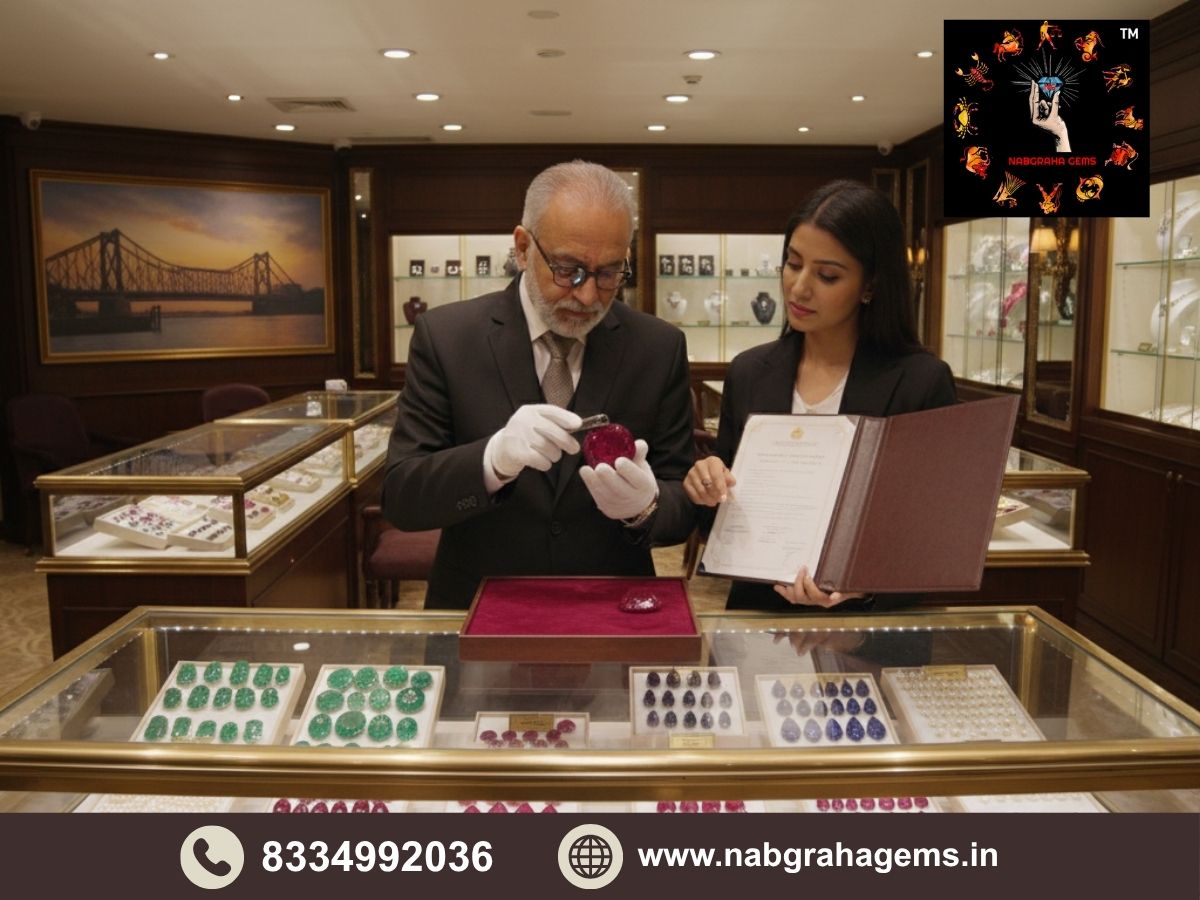
A professional gemstone grading report serves as the official record of laboratory findings.
Typical report contents include:
Identification Information
- Gemstone species
- Variety
- Weight
- Dimensions
Authenticity Assessment
- Natural or synthetic status
- Presence of imitation materials
Treatment Disclosure
- Heat treatment
- Fracture filling
- Dyeing
- Other enhancements
Quality Evaluation
- Color assessment
- Clarity observations
- Cut analysis
Origin Findings
If determinable, geographic origin may be included.
Photographic Documentation
Many modern reports feature high-resolution images for identification purposes.
This report becomes a valuable document for ownership, resale, insurance, and investment.
Challenges in Gemstone Authentication
Despite advanced technology, gemstone authenticity testing presents several challenges.
Sophisticated Synthetic Stones
Modern synthetic gemstones can closely mimic natural stones.
Emerging Treatments
New enhancement techniques continue to evolve, requiring laboratories to update testing methods regularly.
Similar Gem Species
Certain gemstones share overlapping characteristics, making identification complex.
Origin Verification
Determining geographic origin remains one of the most challenging aspects of gemstone analysis.
To overcome these challenges, leading gemstone certification labs invest heavily in research, equipment, and gemological expertise.
Benefits of Buying Certified Gemstones
Purchasing certified gemstones offers numerous advantages.
Greater Transparency
Certification provides objective information about gemstone characteristics.
Improved Investment Security
Investors gain confidence knowing the stone has undergone professional examination.
Easier Insurance Coverage
Insurance companies often require certification documentation.
Stronger Resale Value
Certified stones generally attract more buyer interest and command stronger market confidence.
Reduced Risk
Independent verification minimizes the likelihood of purchasing misrepresented gemstones.
How to Choose a Reputable Gemological Laboratory
Not all certification providers offer the same level of expertise.
When selecting a laboratory, consider:
Industry Reputation
Choose laboratories recognized within the gemstone and jewelry industry.
Scientific Capabilities
Look for advanced testing equipment and modern analytical methods.
Experienced Gemologists
Qualified professionals are essential for accurate evaluation.
Detailed Reporting
A high-quality gemstone grading report should be clear, comprehensive, and transparent.
Independence
Laboratories should operate independently from gemstone sellers to avoid conflicts of interest.
The Future of Gemstone Certification
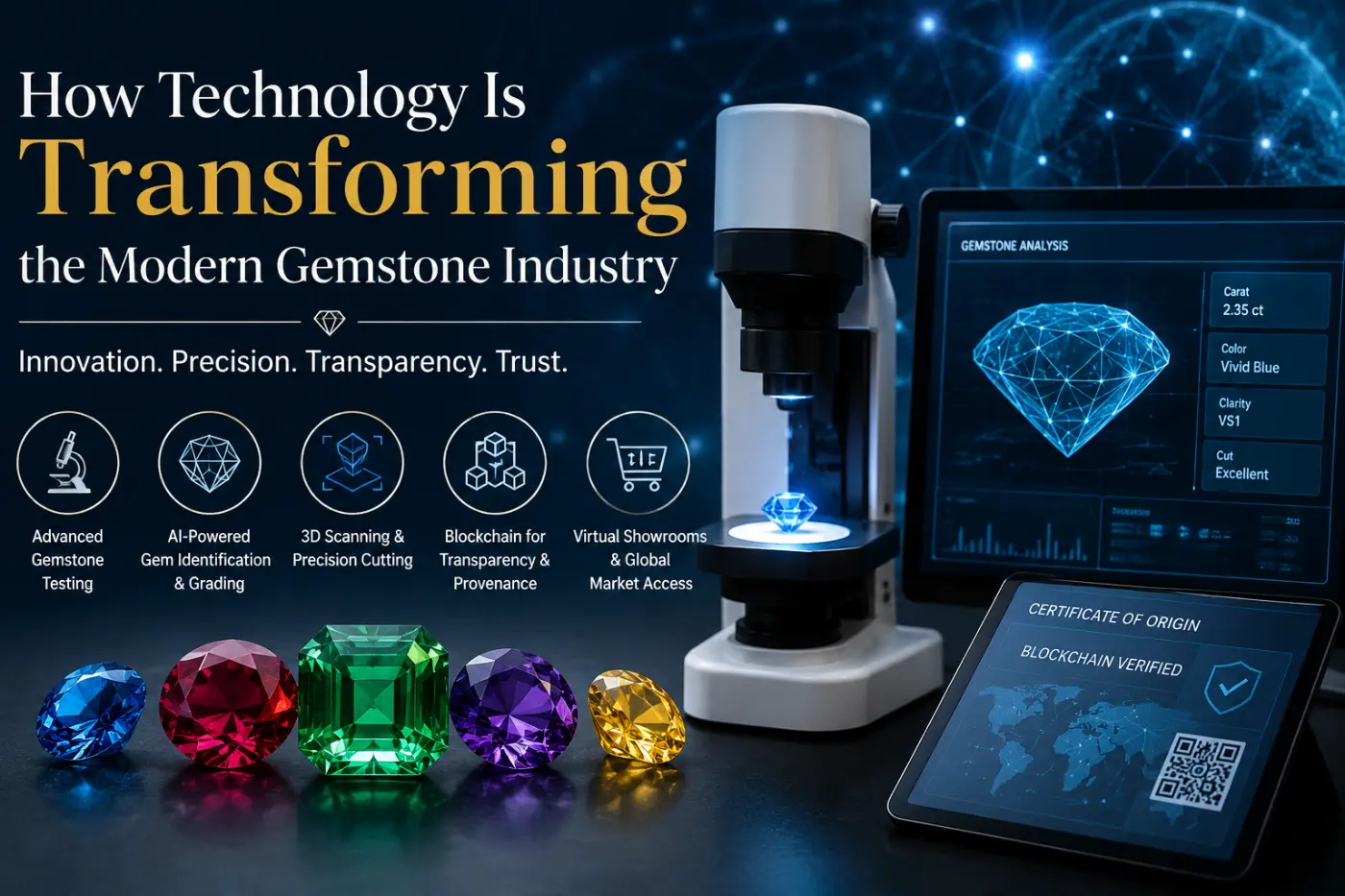
Technology continues to transform the field of gemstone certification.
Emerging developments include:
- Artificial intelligence-assisted analysis
- Digital certification systems
- Blockchain-based gemstone tracking
- Enhanced spectroscopy techniques
- Automated grading technologies
These innovations promise even greater accuracy, transparency, and consumer confidence.
As gemstone markets become increasingly global, reliable certification will remain a cornerstone of trust within the industry.
Conclusion
The process of gemstone certification is far more sophisticated than many consumers realize. Through advanced gemstone testing, microscopic examination, spectroscopy, and scientific analysis, professional gemstone certification labs verify the identity, authenticity, and quality of precious stones.
From detecting treatments to performing detailed gemstone quality grading, a trusted gemological laboratory provides valuable insights that protect buyers and support fair market transactions. The resulting gemstone grading report serves as an authoritative record that enhances transparency, confidence, and long-term value.
Whether you are a collector, investor, jeweler, or first-time buyer, choosing certified gemstones backed by professional precious stone certification is one of the smartest ways to ensure authenticity and quality. As technology advances and gemstone authenticity testing becomes even more precise, certification will continue to play a vital role in maintaining trust throughout the global gemstone industry.
Recent Posts


2026-09-04
The Science Behind Gemstone Fluorescence








2025-09-15