Date : 2026-08-01
When purchasing a precious or semi-precious gemstone, most buyers focus on the obvious factors: color, clarity, cut, size, and price. While these characteristics are undeniably important. One critical detail is often overlooked: gemstone origin.
If you are investing in a sapphire, emerald, ruby, or any other precious stone. Knowing where it comes from can dramatically influence its value, rarity, beauty, authenticity. And long-term investment potential. Yet many first-time buyers don't realize why gemstone origin matters. Until after they have made a purchase.
A gemstone's origin isn't just about geography. It tells the story of how the stone formed deep within the Earth over millions of years. The mining conditions, the geological environment, and often its market reputation. Certain countries have earned worldwide recognition for producing gemstones. With exceptional color, purity, and durability, making it the gemstone country of origin. A key consideration among collectors, investors, and jewelry enthusiasts alike.
We will examine the significance of gemstone origin in this extensive blog. Describe how pricing and desirability are impacted by origin. Talk about the importance of the natural origin of gemstones. Additionally, demonstrate how selecting a certified gemstone origin can safeguard your investment.
What Is Gemstone Origin?
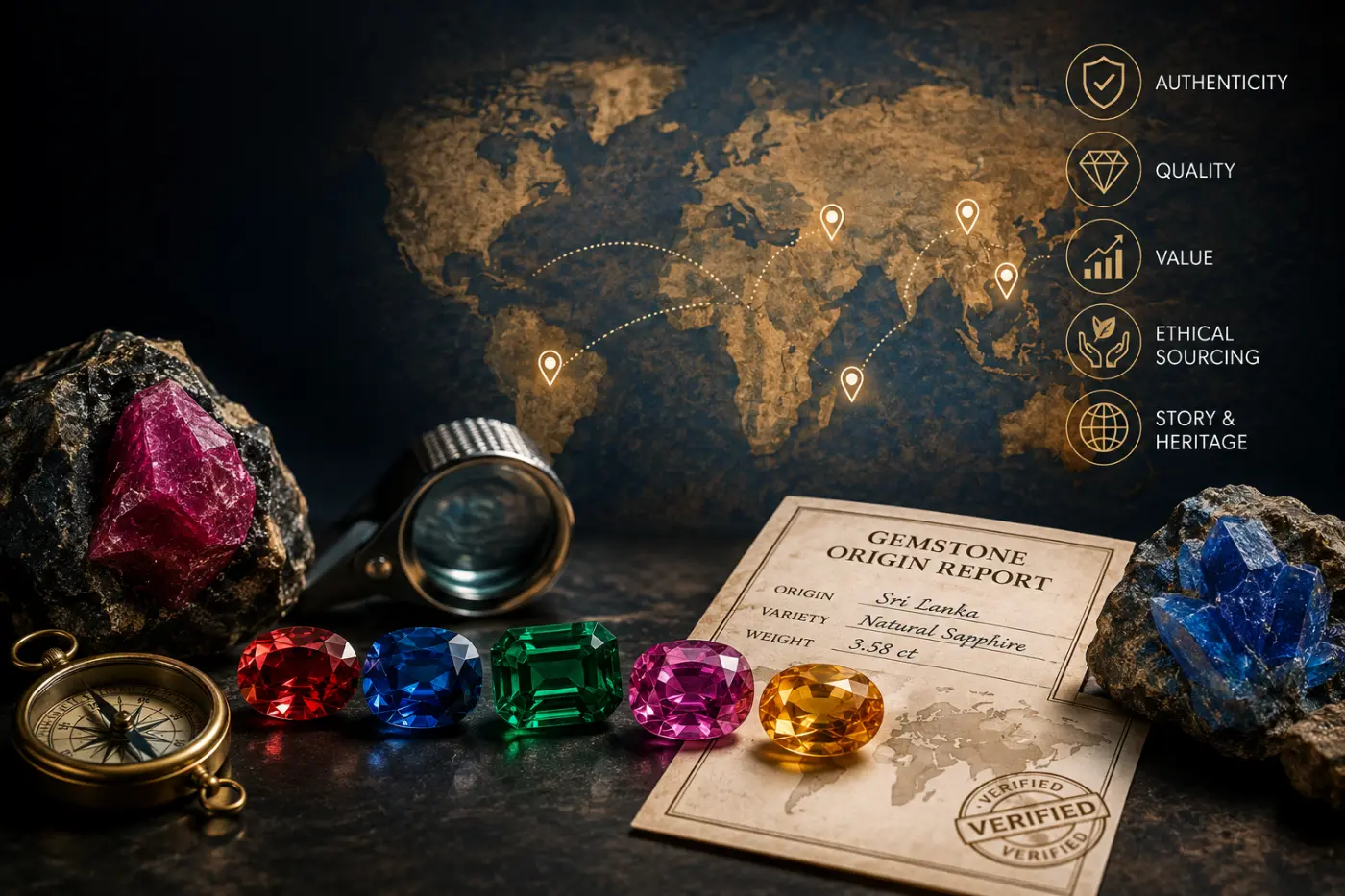
Gemstone origin refers to the geographical location where a gemstone was naturally formed and mined. This could be a country, region, or even a specific mine that is internationally recognized for producing exceptional gemstones.
For example:
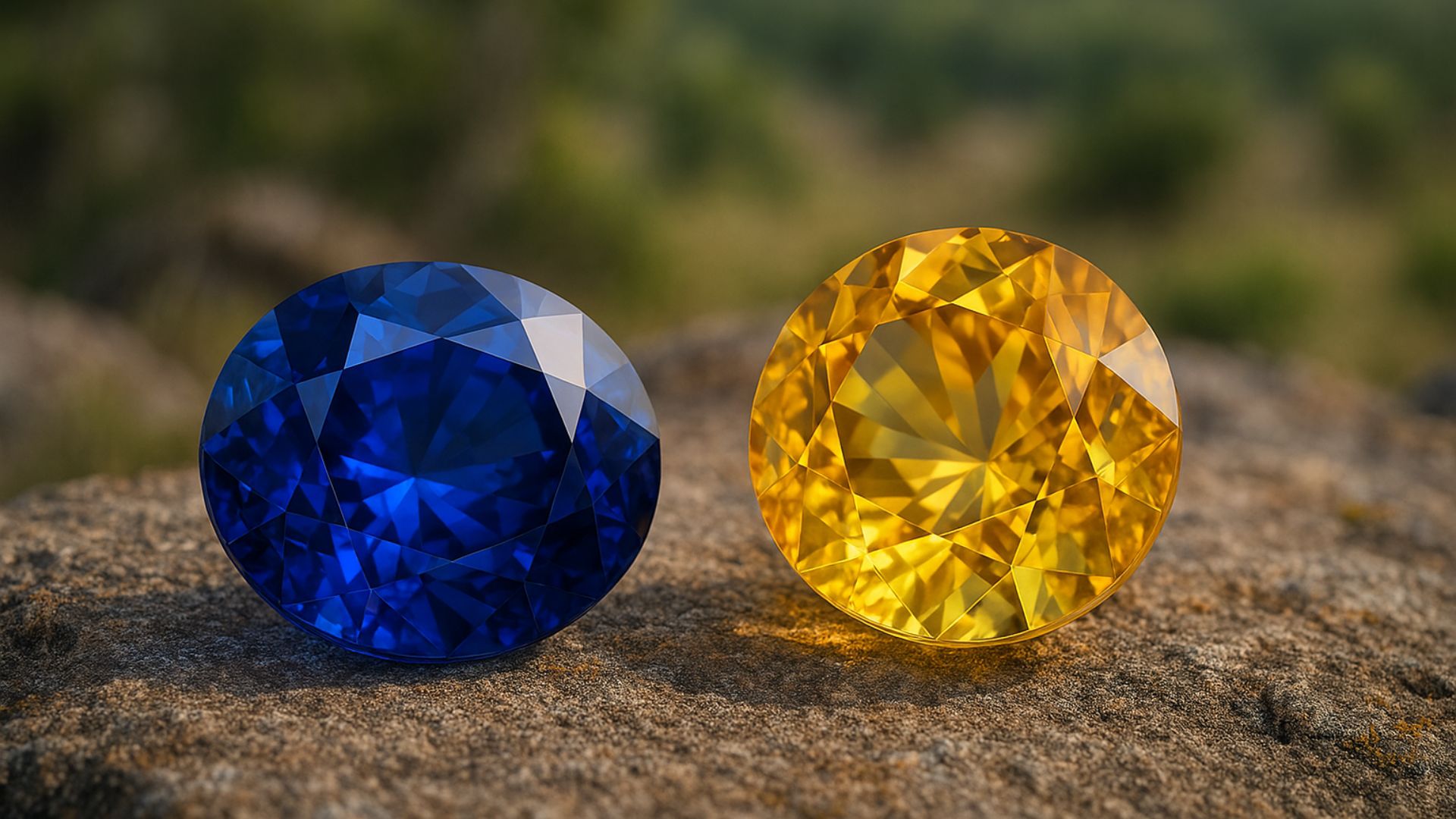
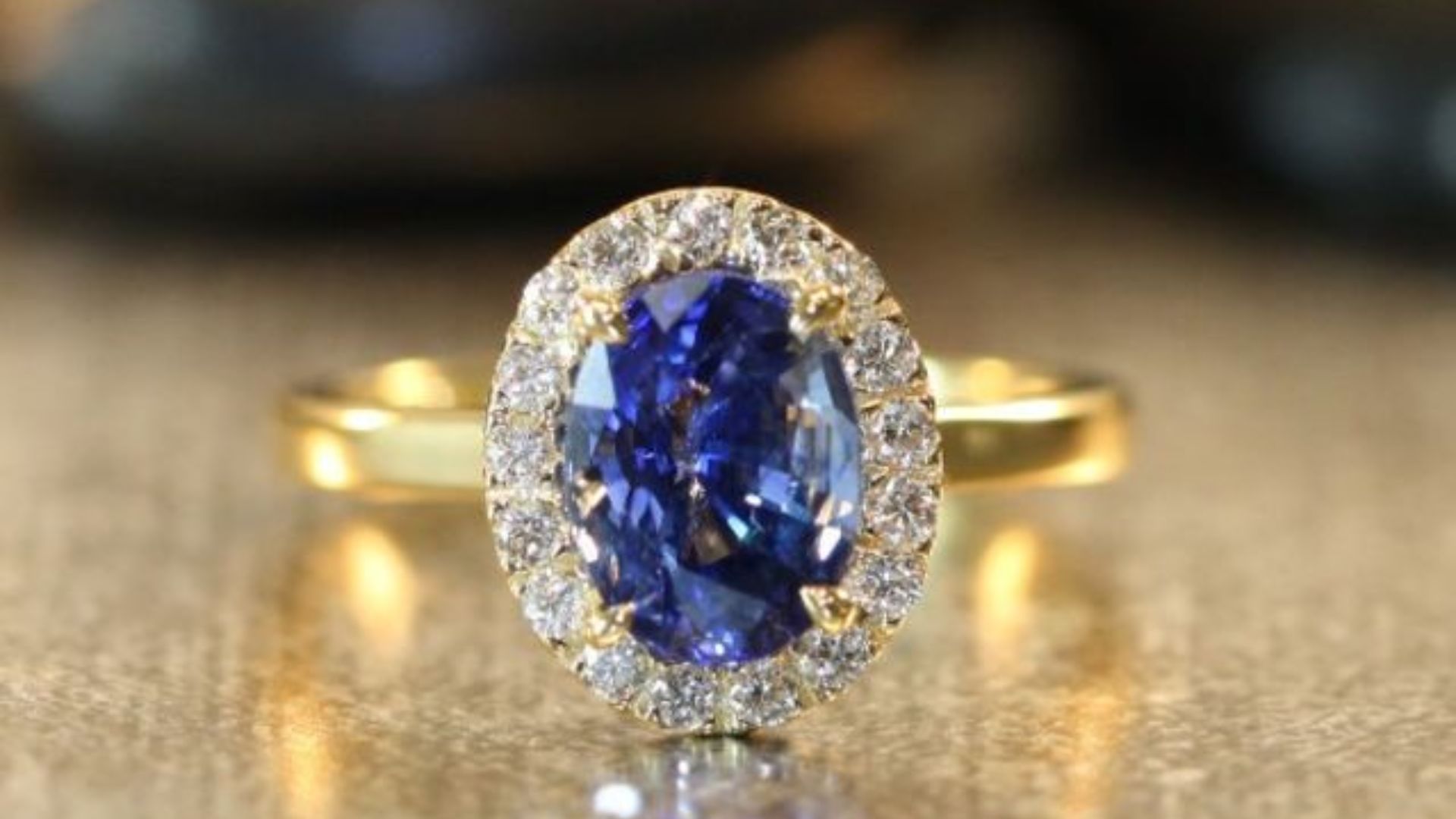
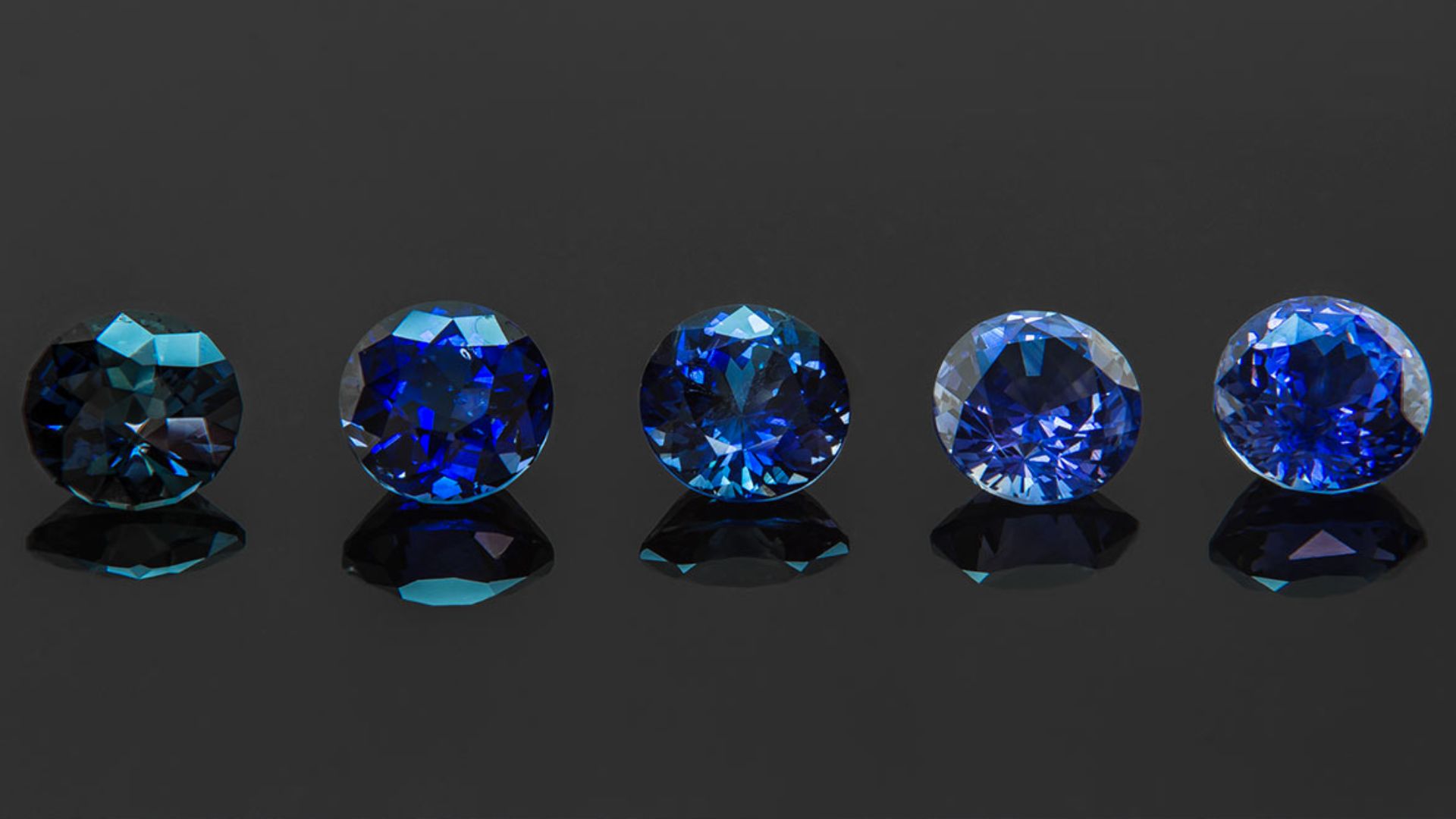
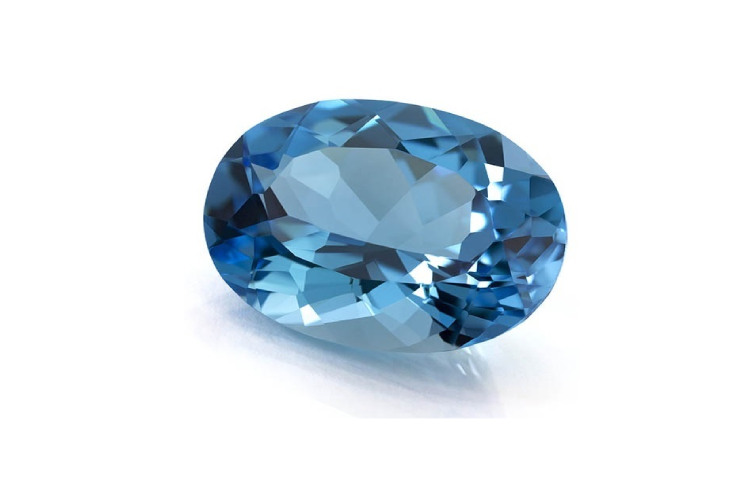
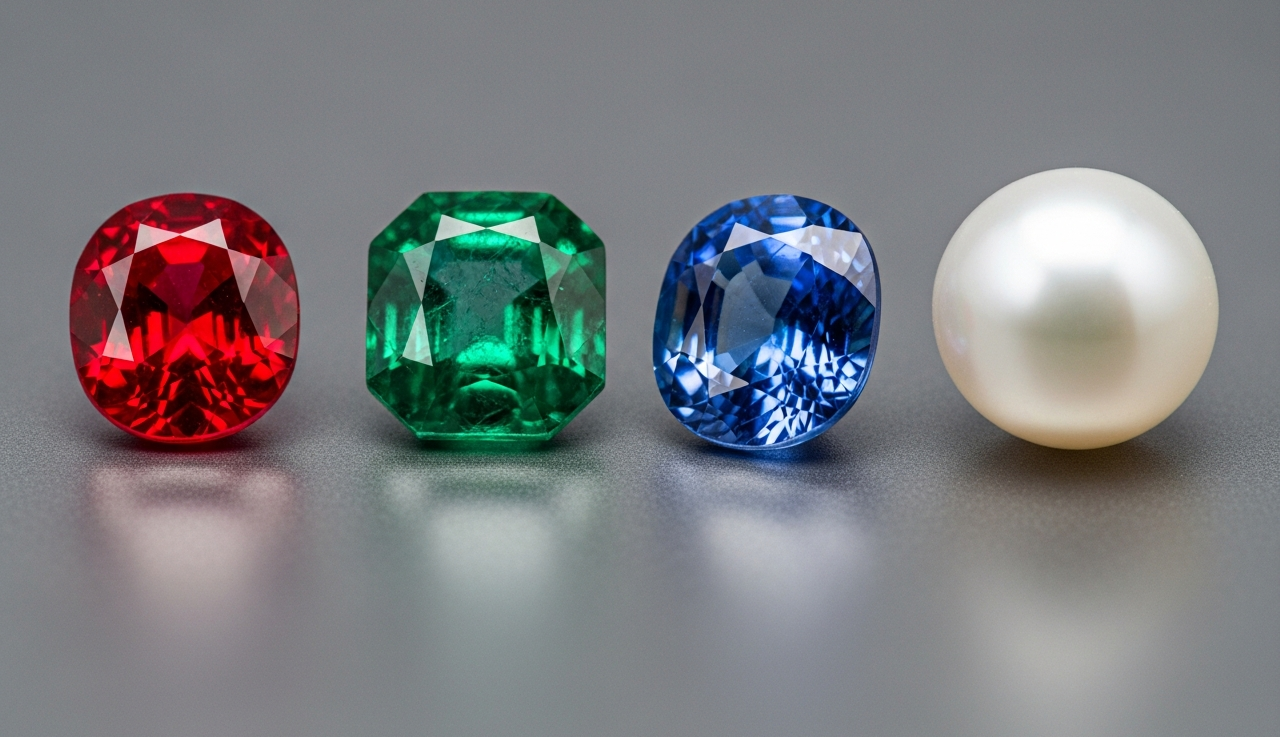
- Kashmir is famous for velvety blue sapphires.
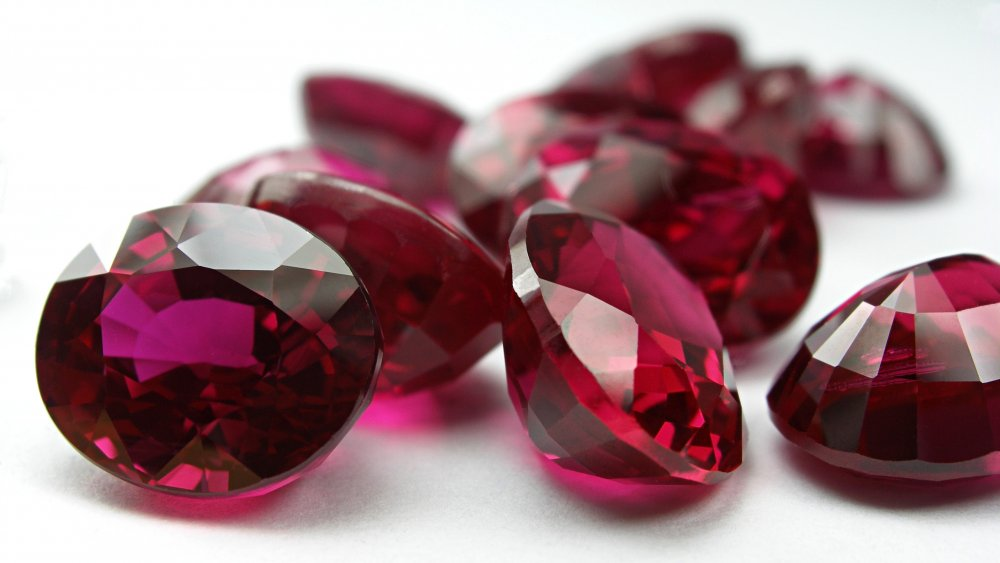
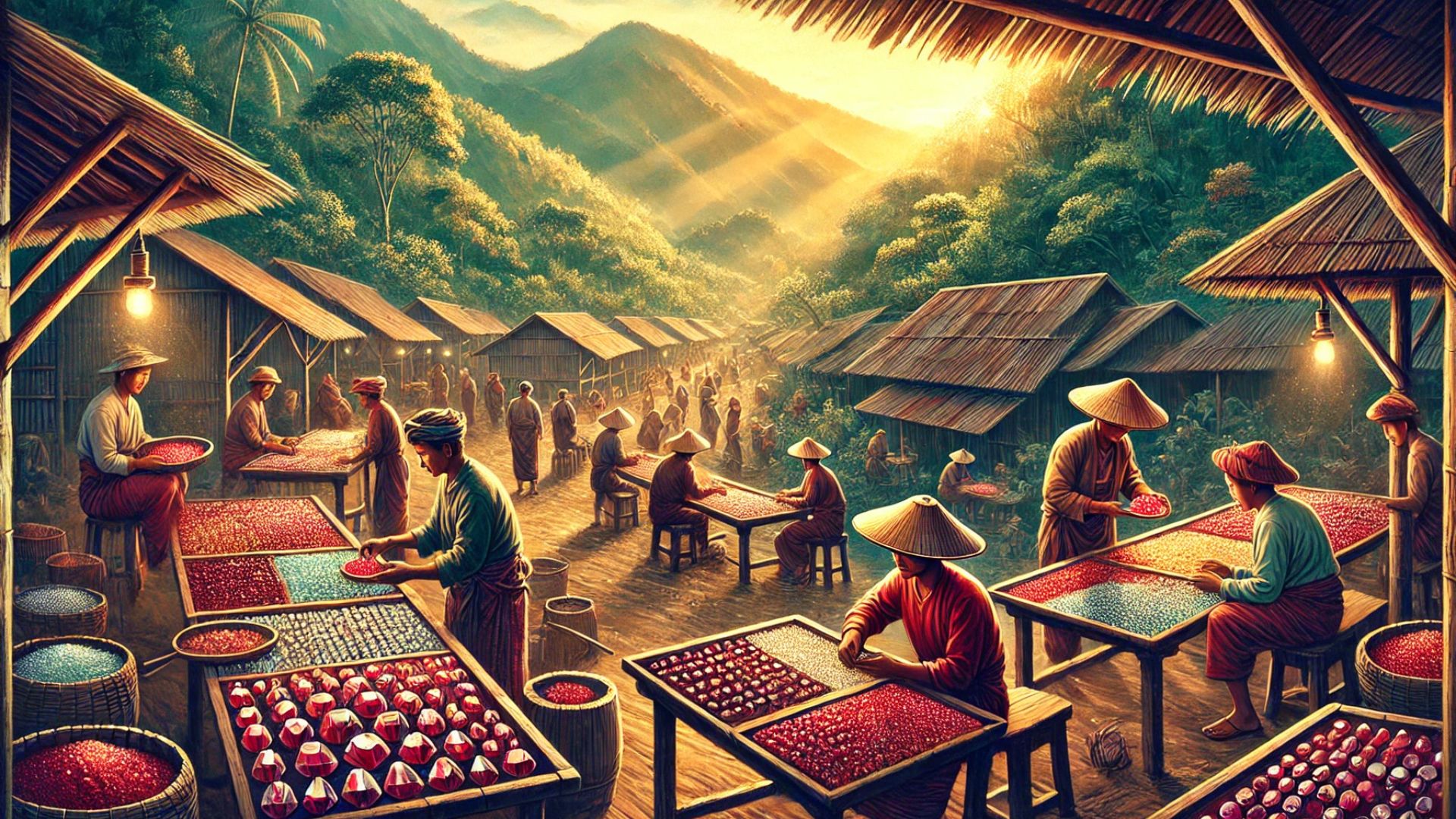
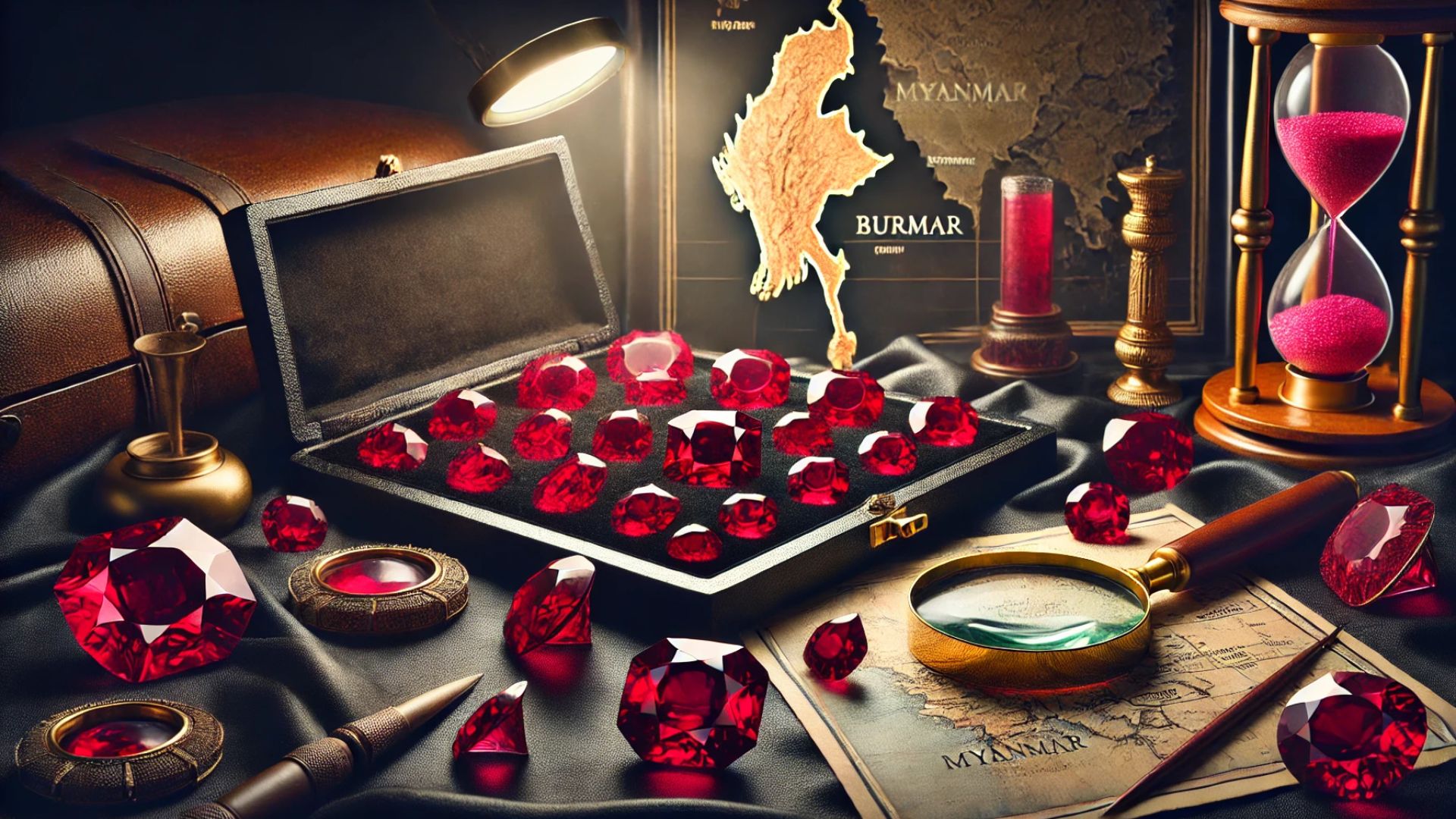
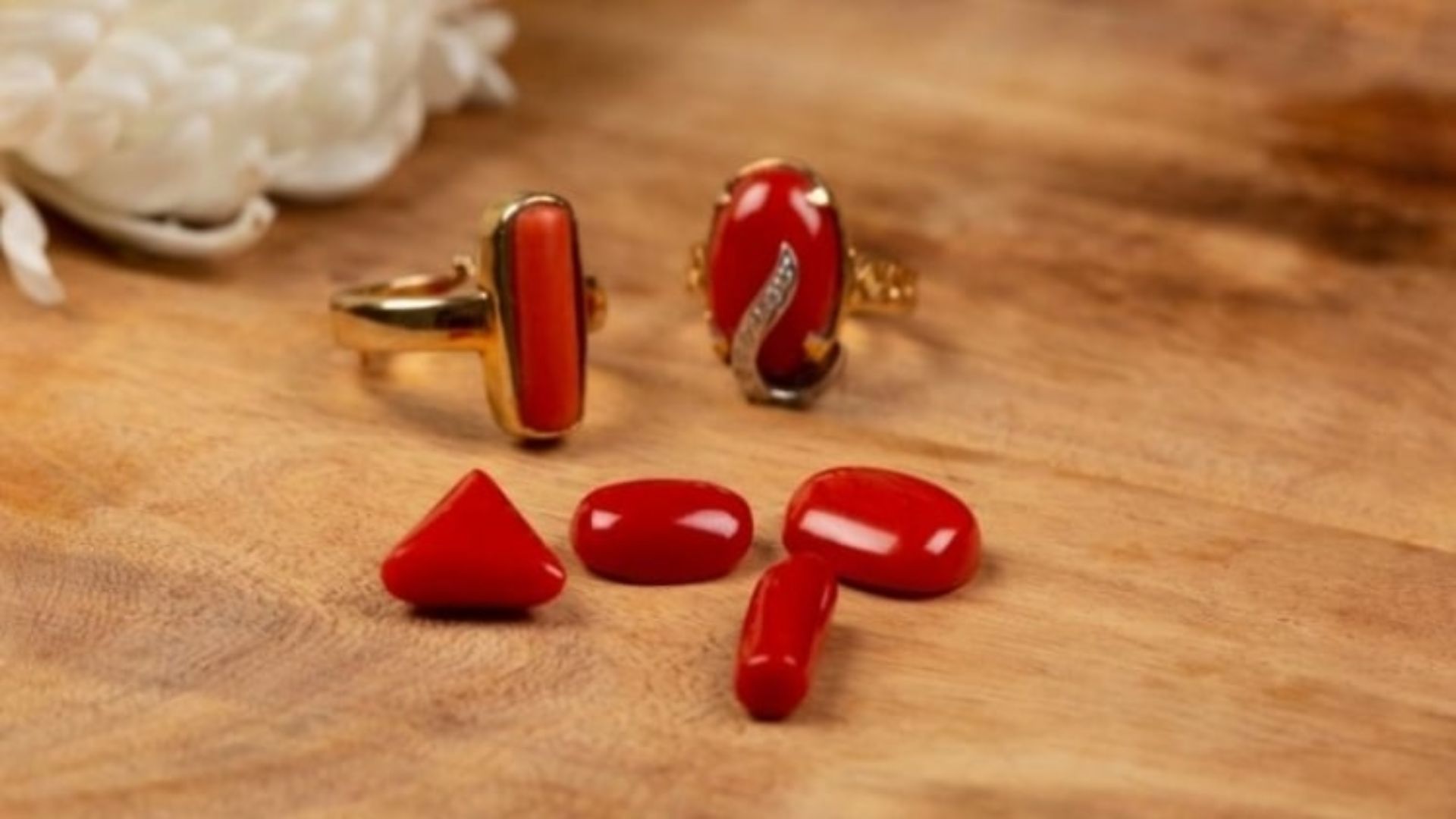
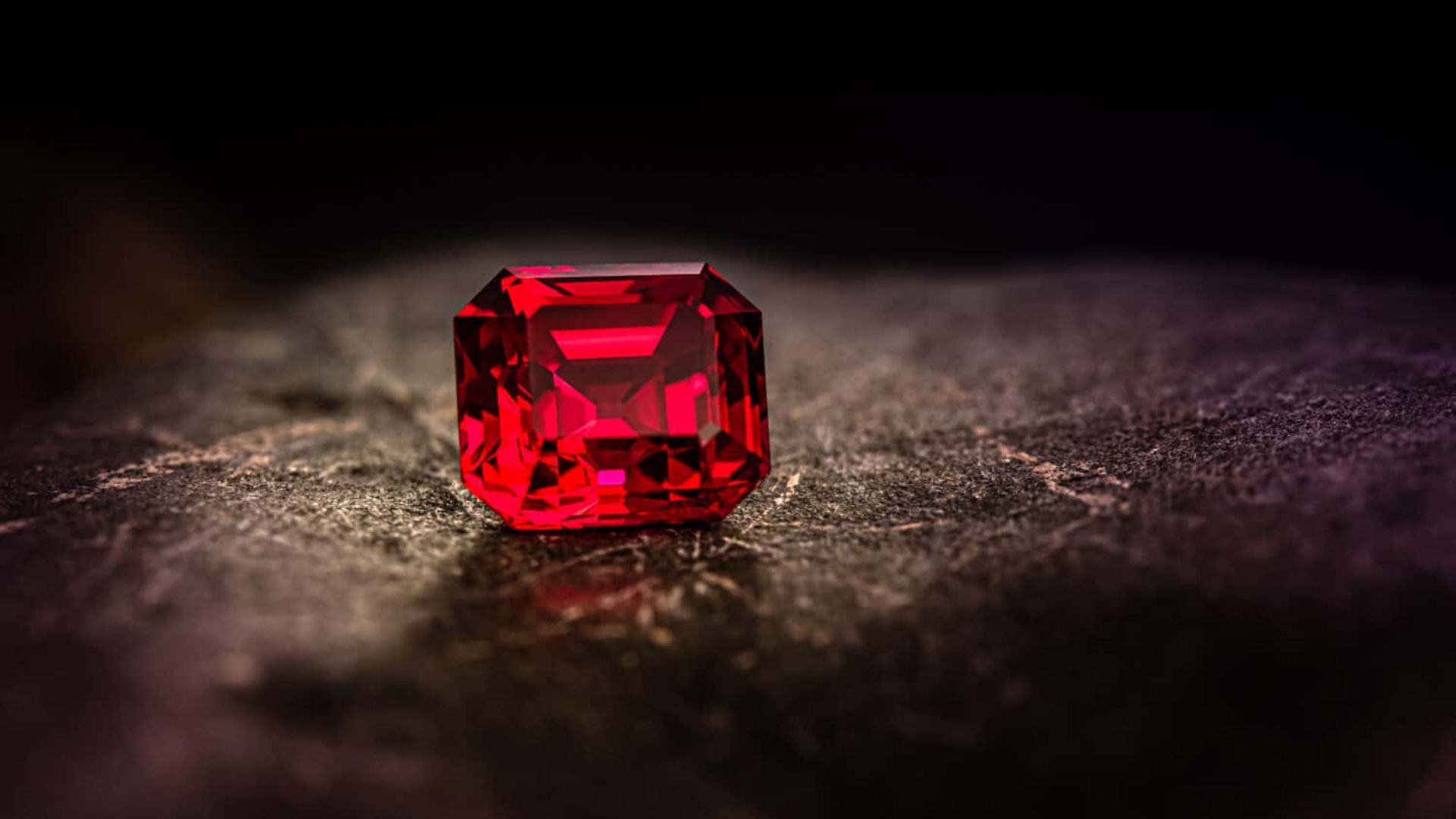
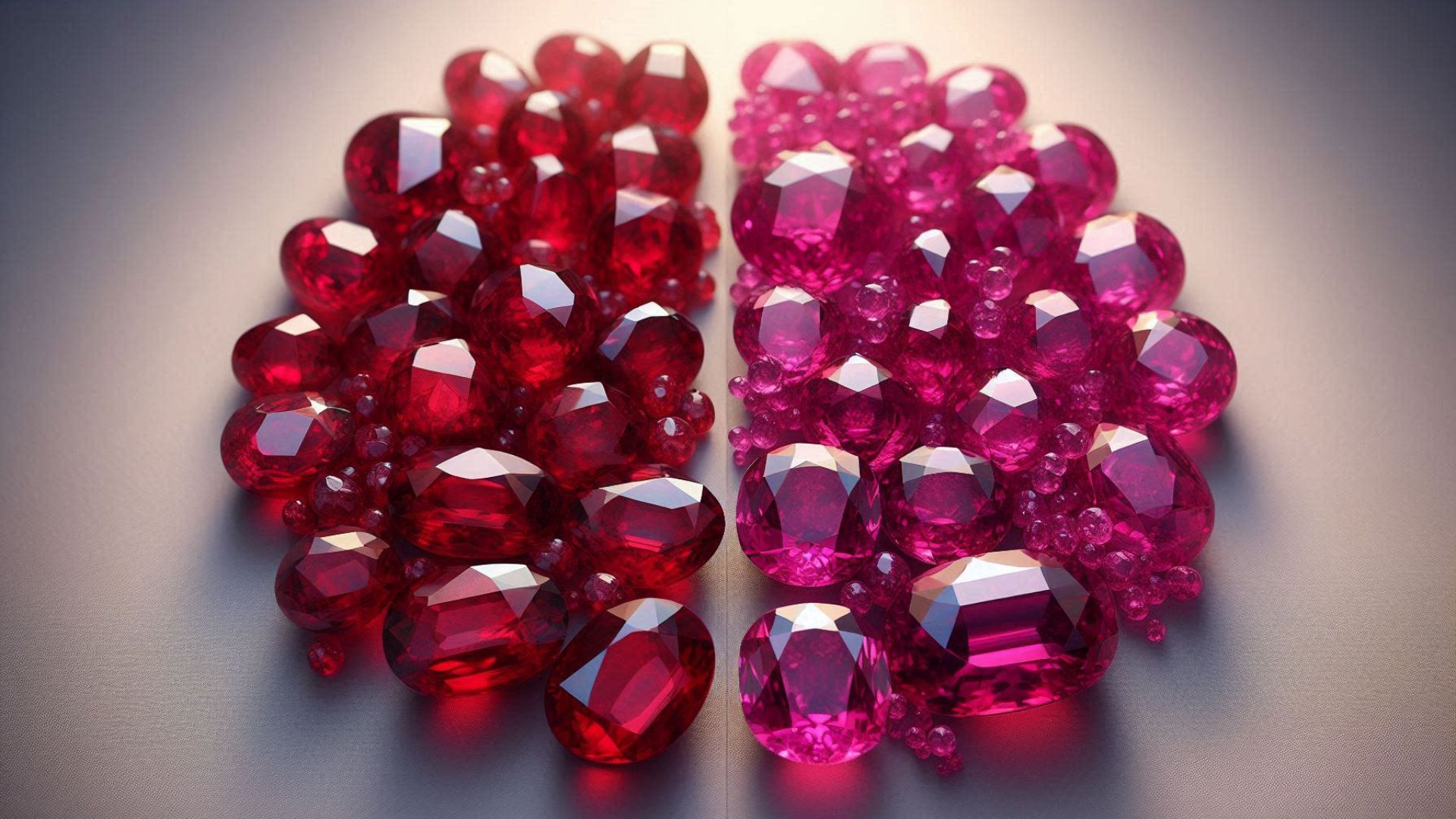
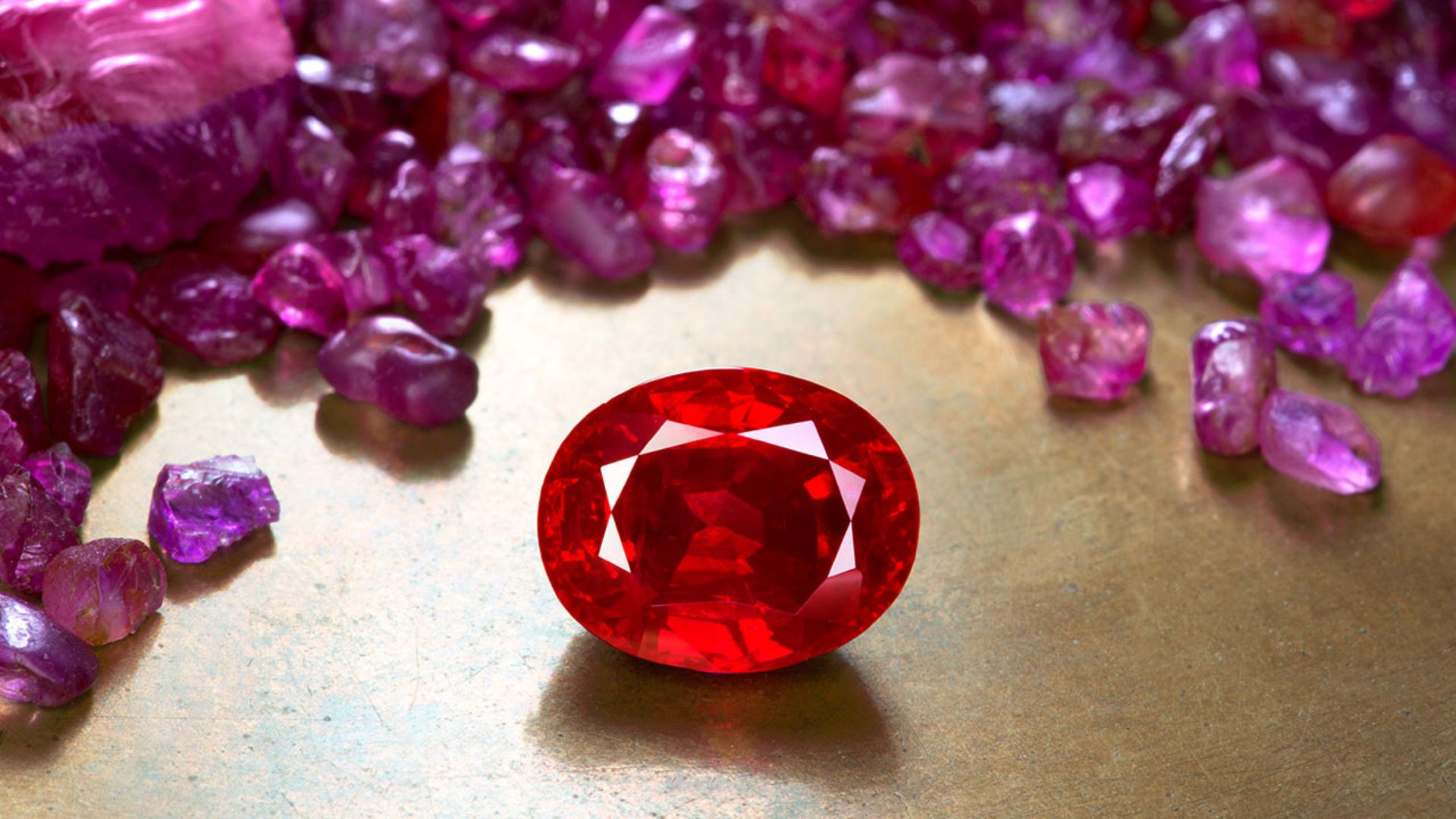
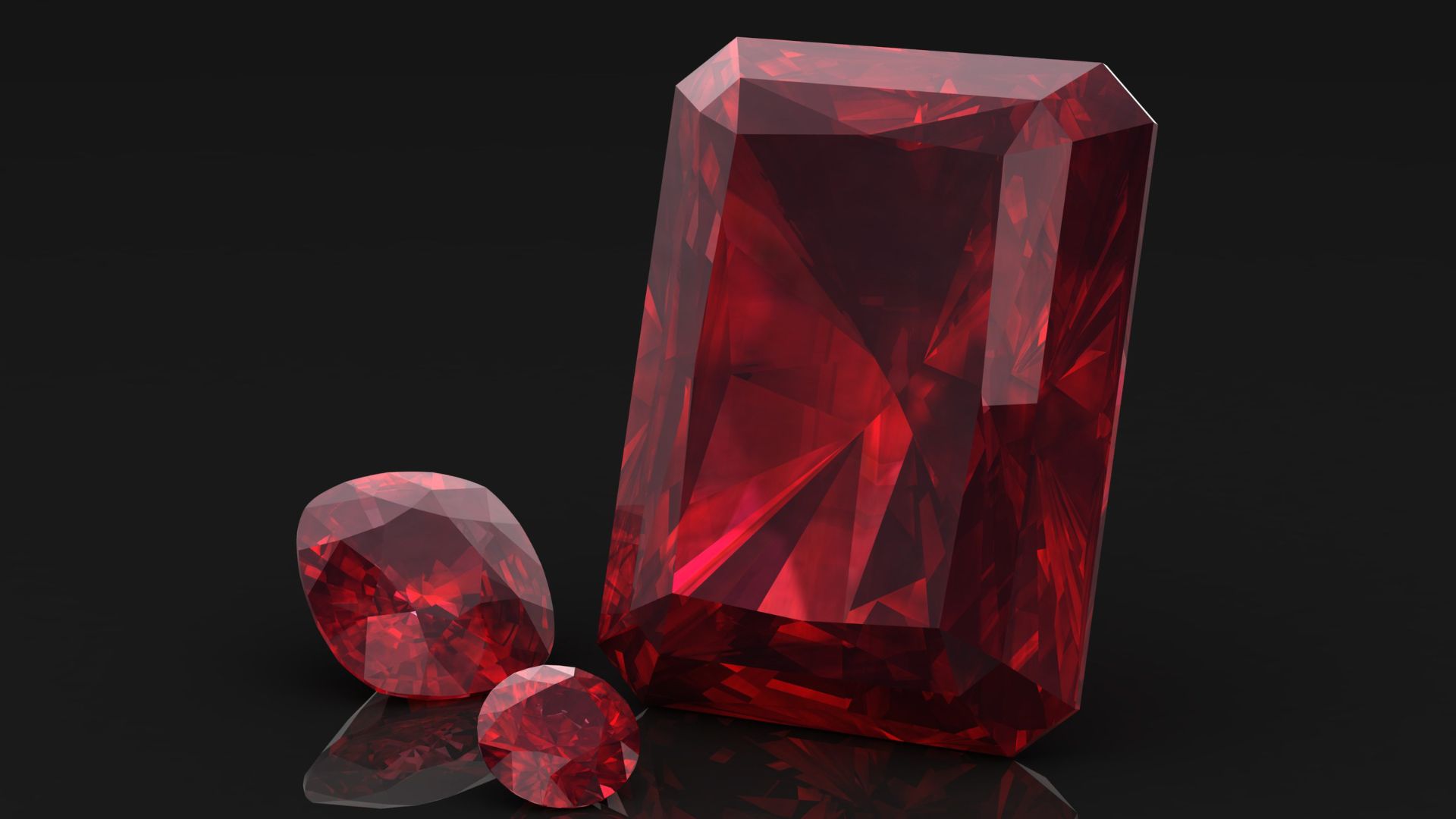
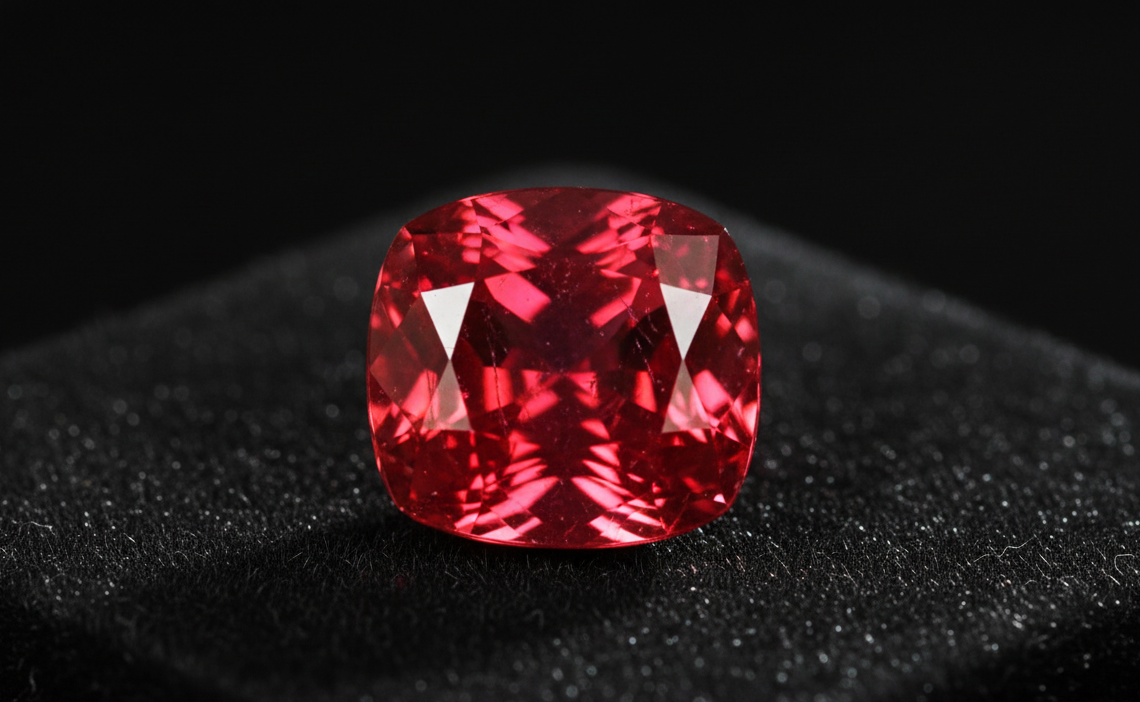
- Myanmar (Burma) is renowned for vivid pigeon-blood rubies.
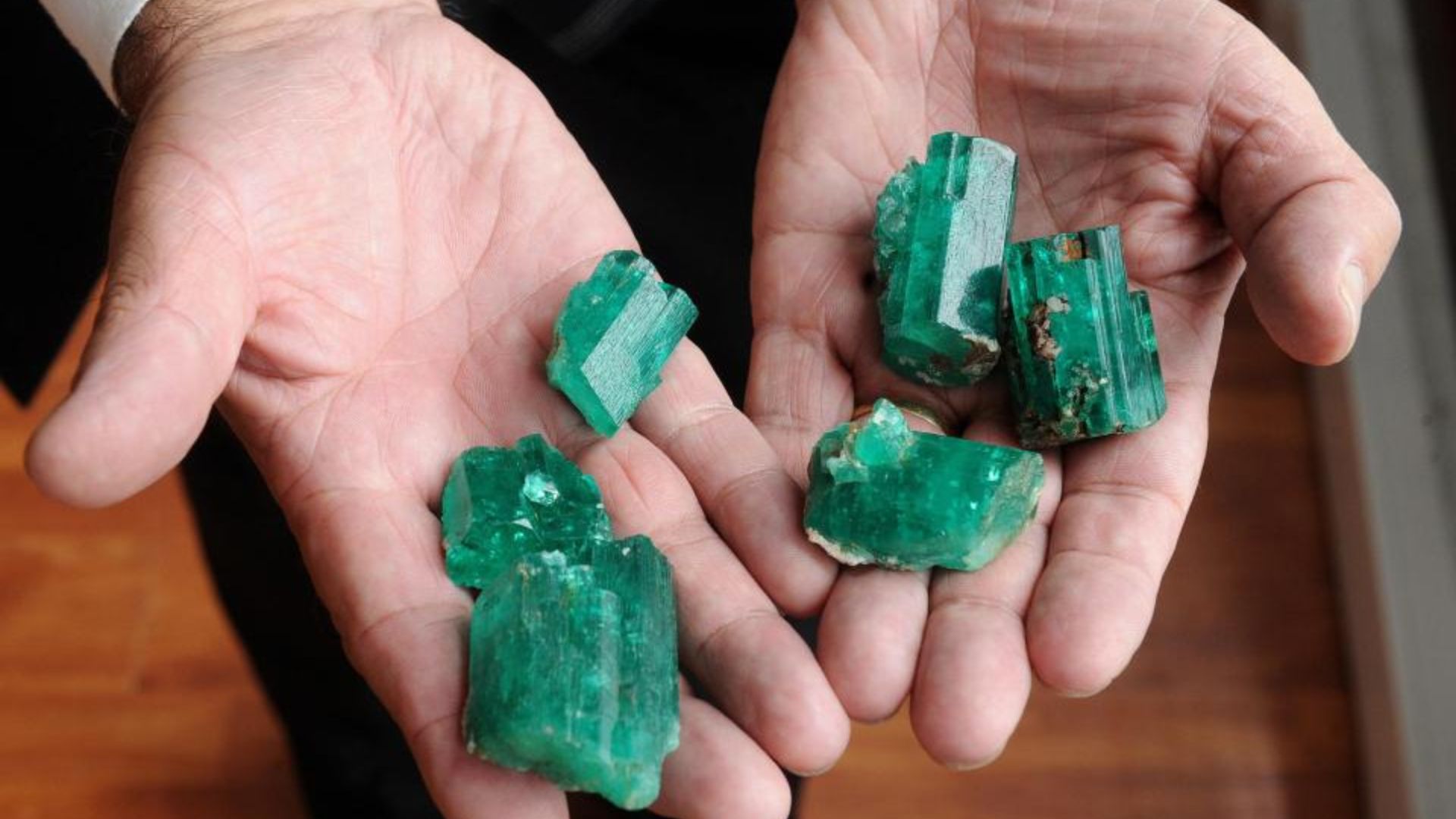
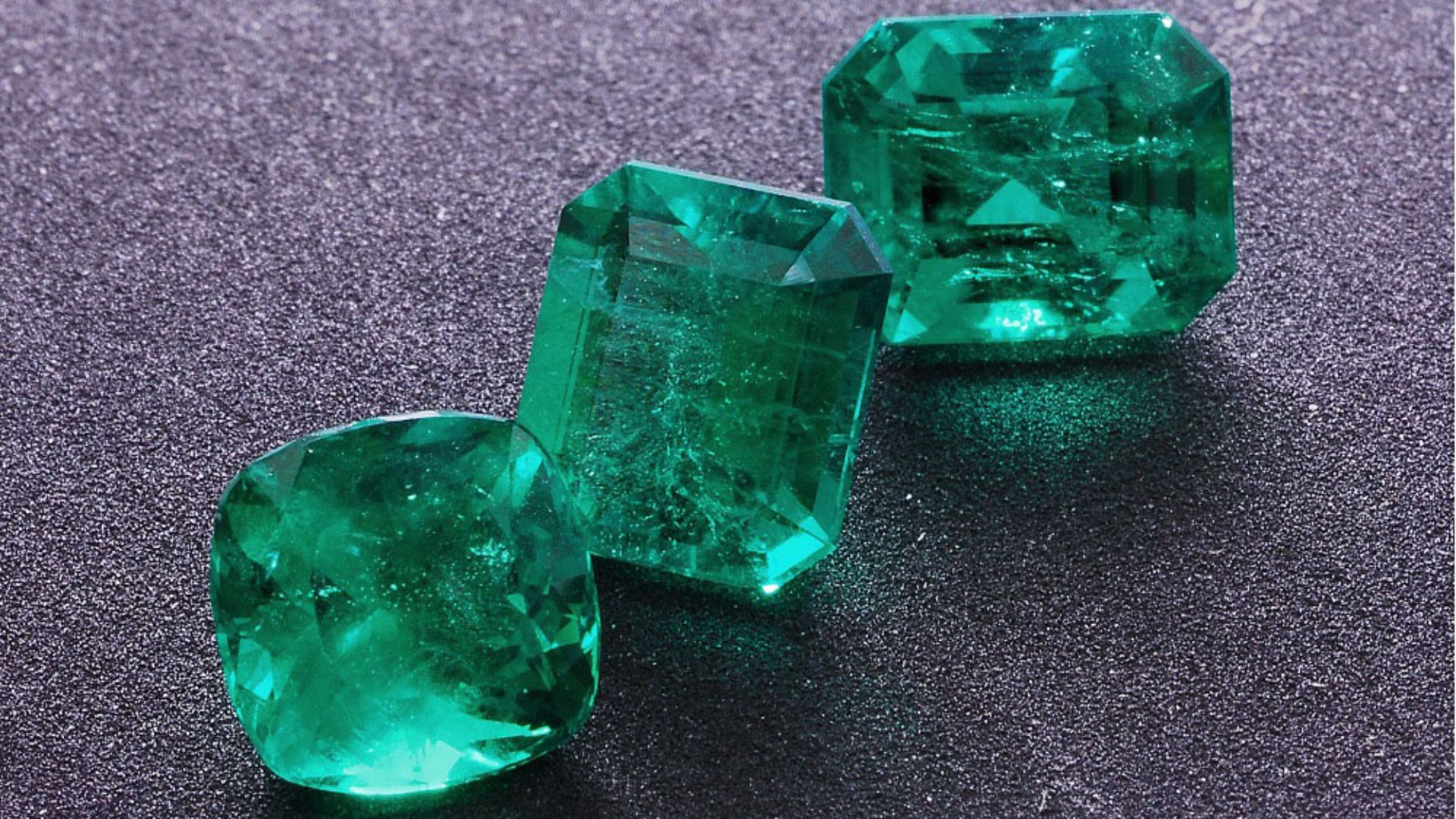
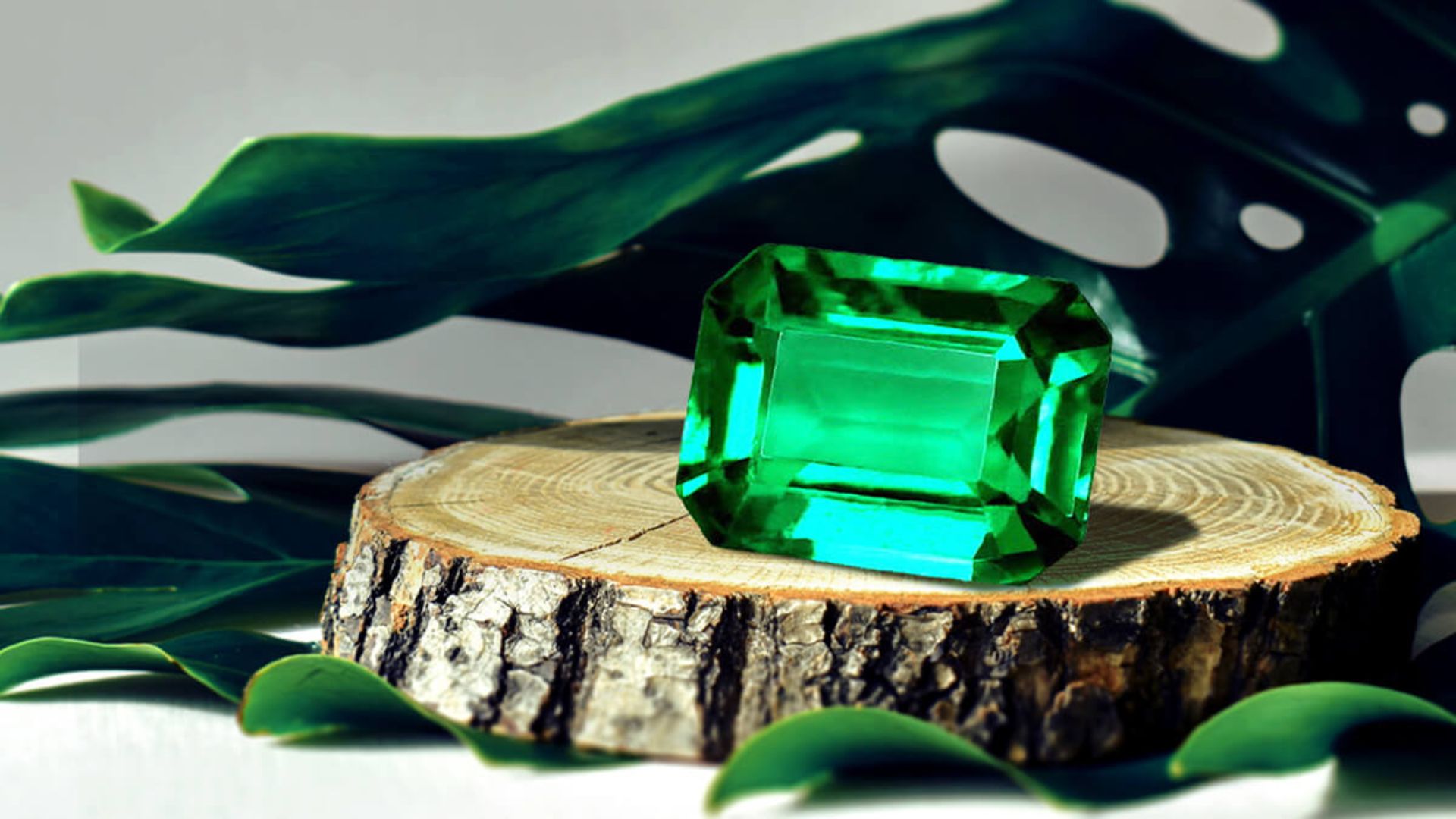
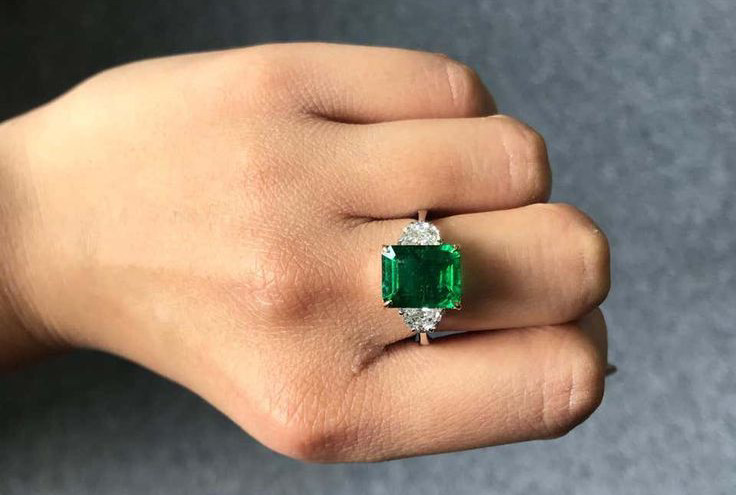
- Colombia is celebrated for rich green emeralds.
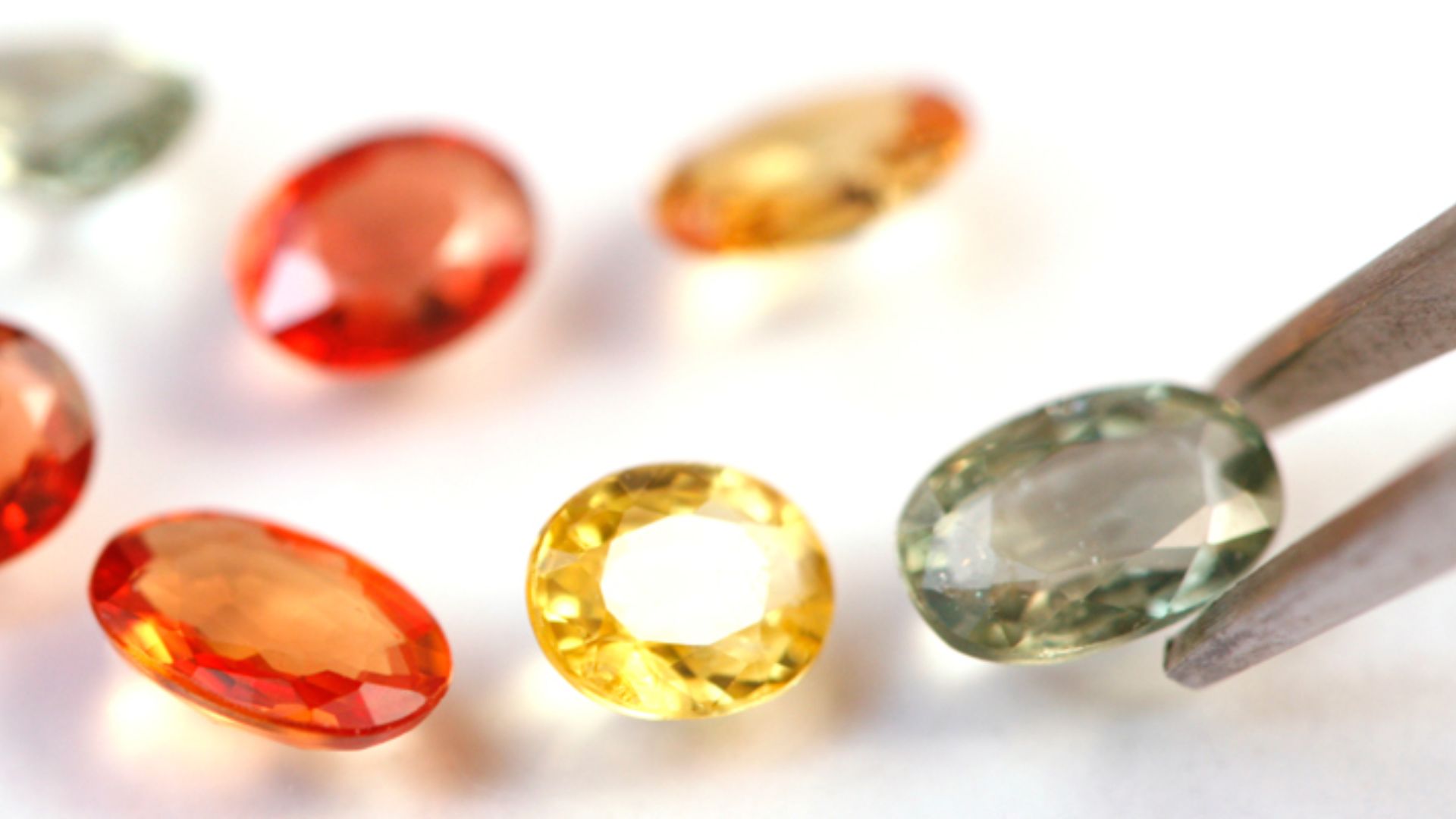
- Sri Lanka produces premium sapphires in a wide range of colors.
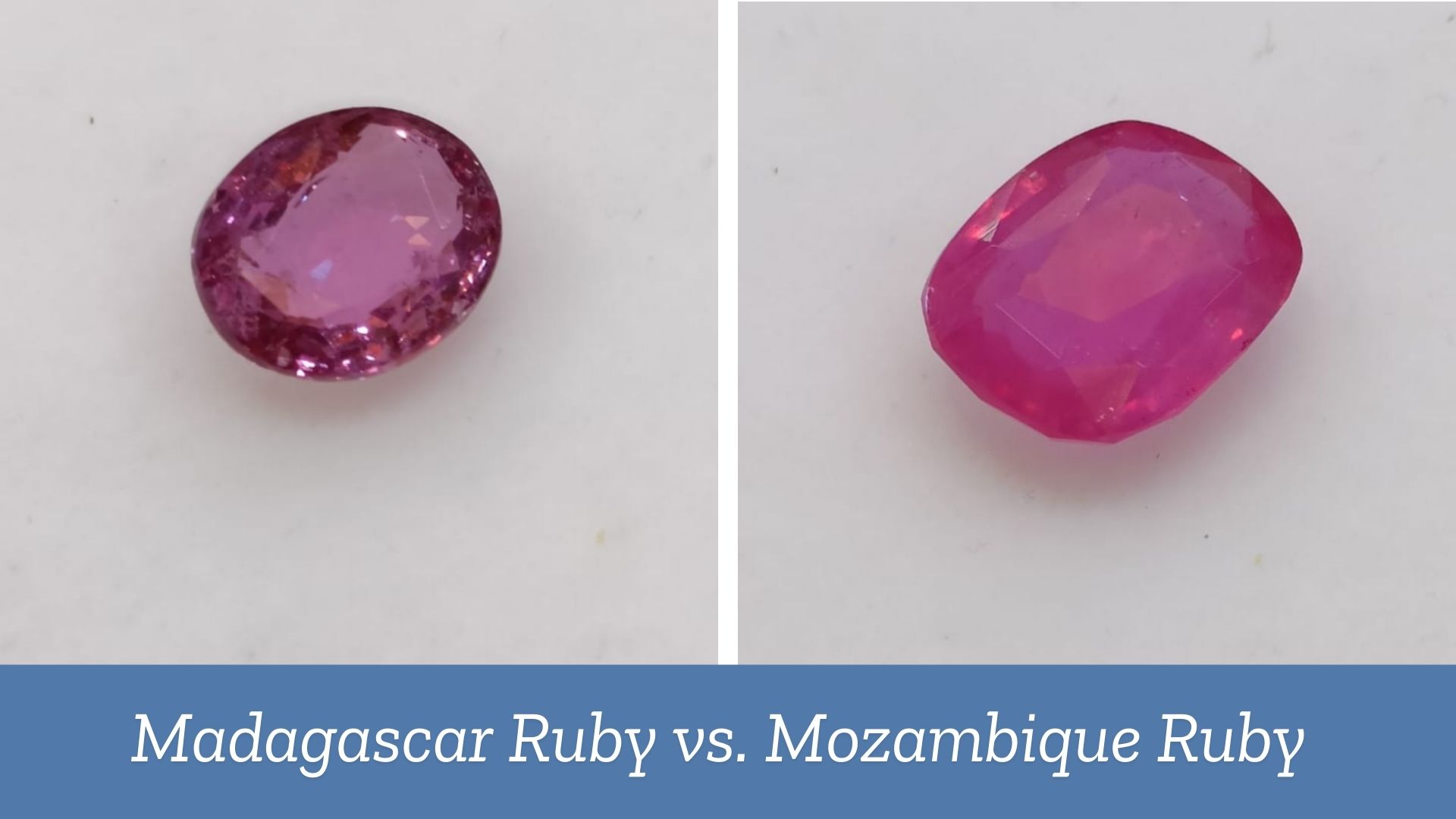
- Mozambique has become one of the world's leading ruby sources.
- Tanzania is the only known source of tanzanite.
Each mining region possesses unique geological conditions that influence a gemstone's appearance and overall quality.
Why Gemstone Origin Matters
Many buyers ask whether the origin really affects the gemstone itself.
The answer is yes—often in several important ways.
Understanding why gemstone origin matters helps buyers make informed purchasing decisions and avoid overpaying for stones that lack desirable characteristics.
Origin impacts:
- Market value
- Rarity
- Color quality
- Historical significance
- Investment potential
- Buyer confidence
- Resale value
- Authenticity
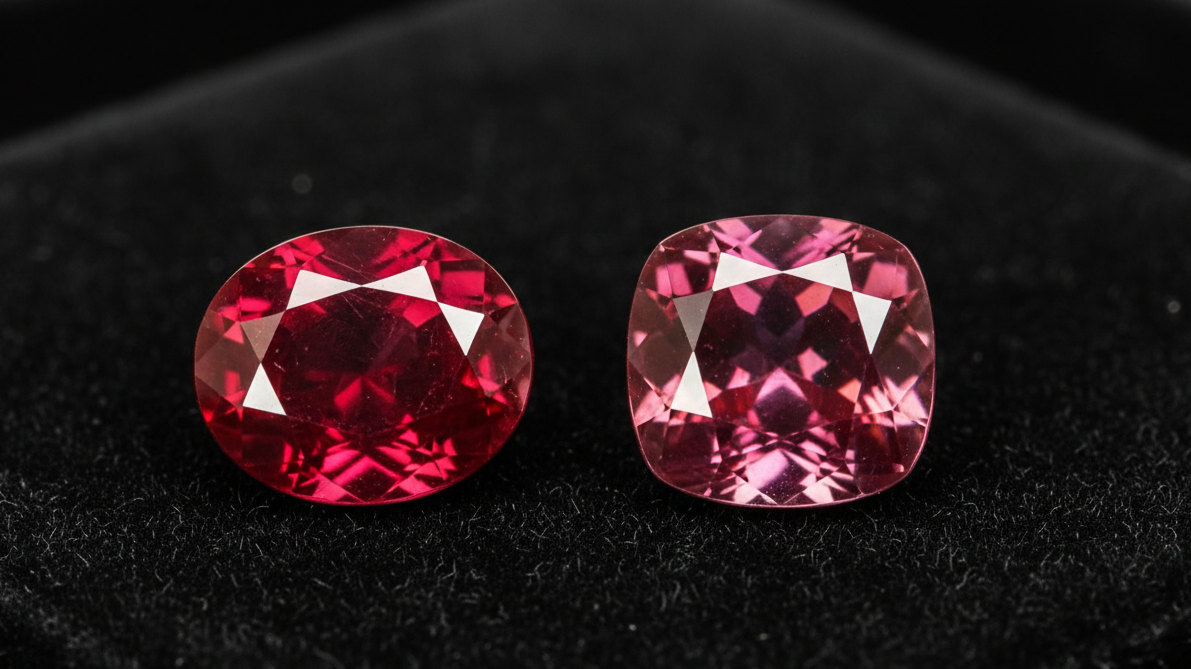
While two gemstones may appear similar, their origin can create a substantial difference in market demand and price.
Geological Conditions Shape Every Gemstone
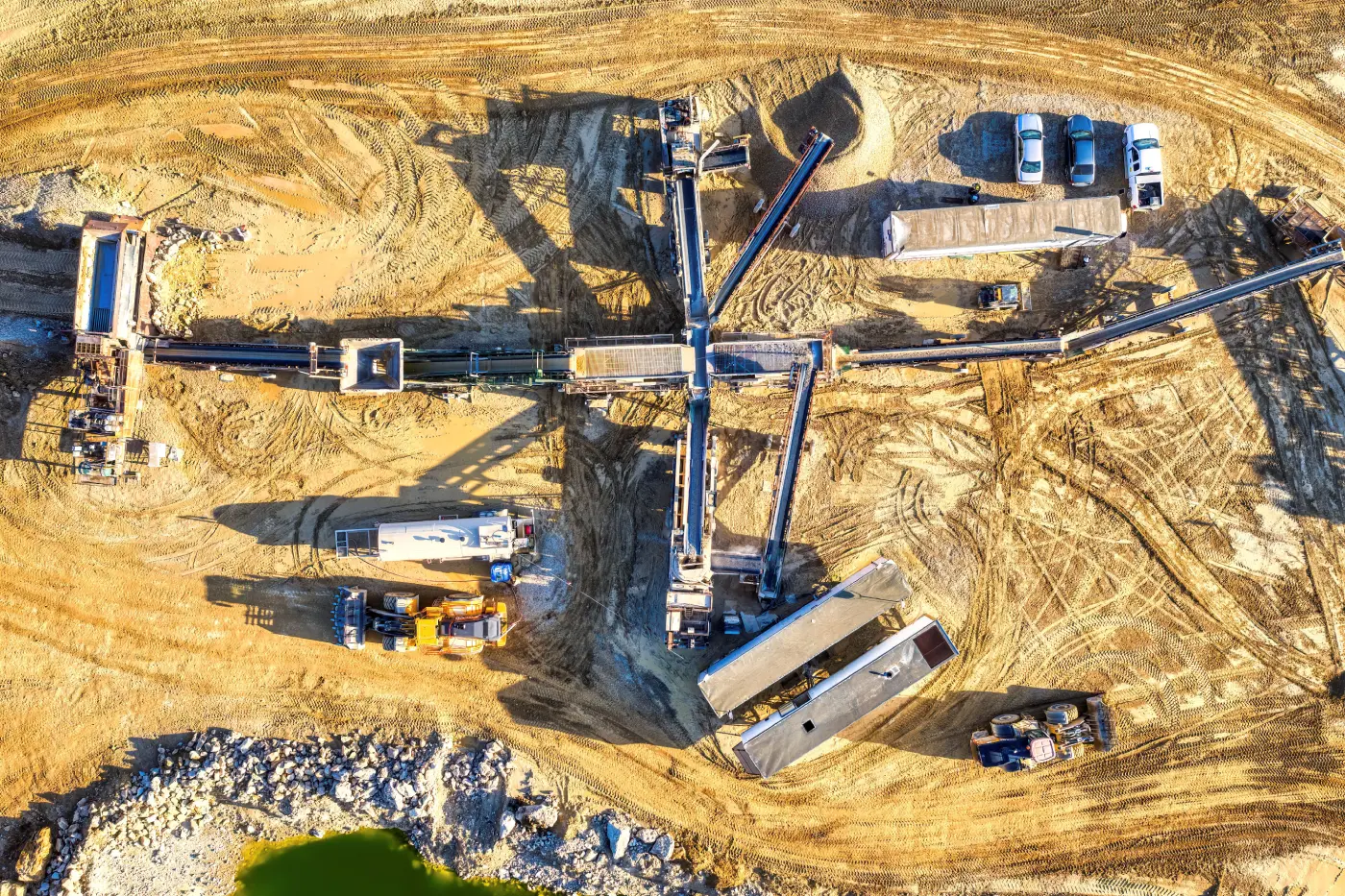
Nature creates gemstones over millions of years under immense pressure and heat. Different regions have unique geological compositions that influence the minerals present during formation.
This is one of the biggest reasons behind the gemstone origin importance.
For instance:
A sapphire from Kashmir often displays a soft, velvety blue appearance because of microscopic mineral inclusions.
A sapphire from Sri Lanka usually exhibits excellent transparency and brighter tones.
Australian sapphires tend to have darker blue-green shades due to different mineral compositions.
These natural variations cannot be artificially replicated with complete accuracy.
Origin Can Significantly Affect Value
One of the biggest factors influencing gemstone prices is origin.
Collectors willingly pay premium prices for stones from legendary mining regions because these sources have established reputations over decades—or even centuries.
For example:
- Kashmir sapphires often command record-breaking auction prices.
- Burmese rubies are among the world's most expensive colored gemstones.
- Colombian emeralds generally sell at higher premiums than emeralds from newer sources.
This is why experienced gem buyers never ignore the gemstone country of origin.
Even when two stones have similar laboratory grades, the one from a prestigious origin frequently commands a significantly higher market price.
Reputation Built Over Centuries
Some gemstone regions have become legendary.
Their names instantly communicate quality.
Examples include:
Kashmir Sapphires
Known for:
- Velvety blue color
- Exceptional rarity
- Historic mining
- Strong collector demand
Burmese Rubies
Famous for:
- Rich red saturation
- Fluorescent glow
- High transparency
- Extraordinary rarity
Colombian Emeralds
Recognized for:
- Deep green color
- Excellent crystal quality
- Minimal bluish tint
- Premium market reputation
Such origins create emotional appeal as well as financial value.
Origin Helps Determine Rarity
Some gemstone deposits become exhausted after decades of mining.
Others produce only small quantities annually.
This limited availability increases rarity.
For example:
Kashmir sapphire mines produced gems for only a relatively short historical period.
Today, authentic Kashmir sapphires are among the rarest gemstones in the world.
Because supply is limited, prices continue to rise.
Understanding the natural gemstone origin allows buyers to recognize whether a gemstone comes from a rare source or a more common deposit.
Natural Origin Versus Synthetic Stones
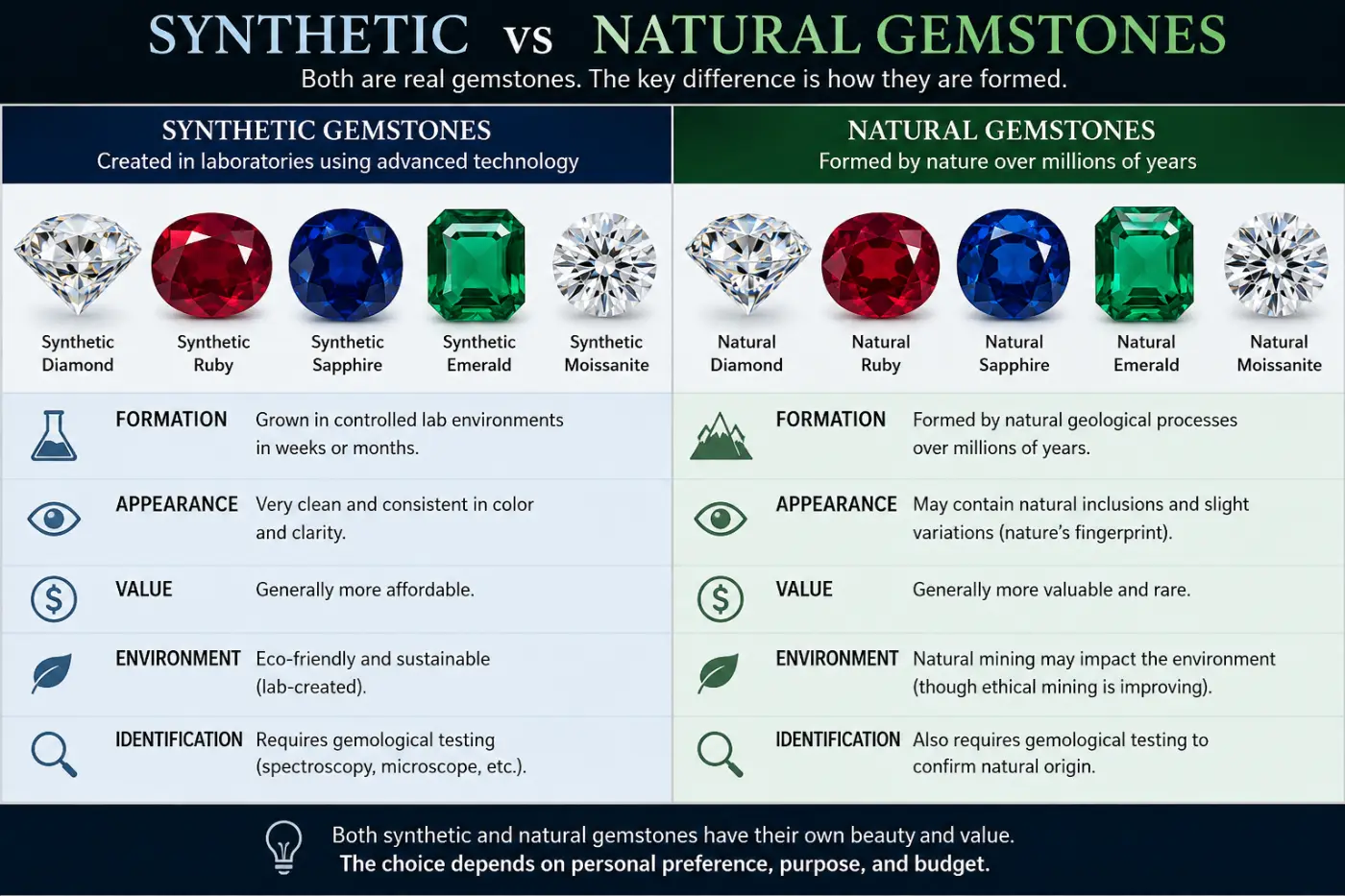
One of today's biggest concerns is distinguishing natural gemstones from synthetic or laboratory-created alternatives.
A natural gemstone origin confirms that the stone formed naturally beneath the Earth's surface rather than in a laboratory.
Natural gemstones possess unique internal characteristics that trained gemologists use for identification.
Synthetic stones may look beautiful but generally have lower rarity and resale value.
For buyers seeking lasting value, choosing natural gemstones is often the preferred option.
Why Certification Is Essential
Origin claims should never rely solely on a seller's statement.
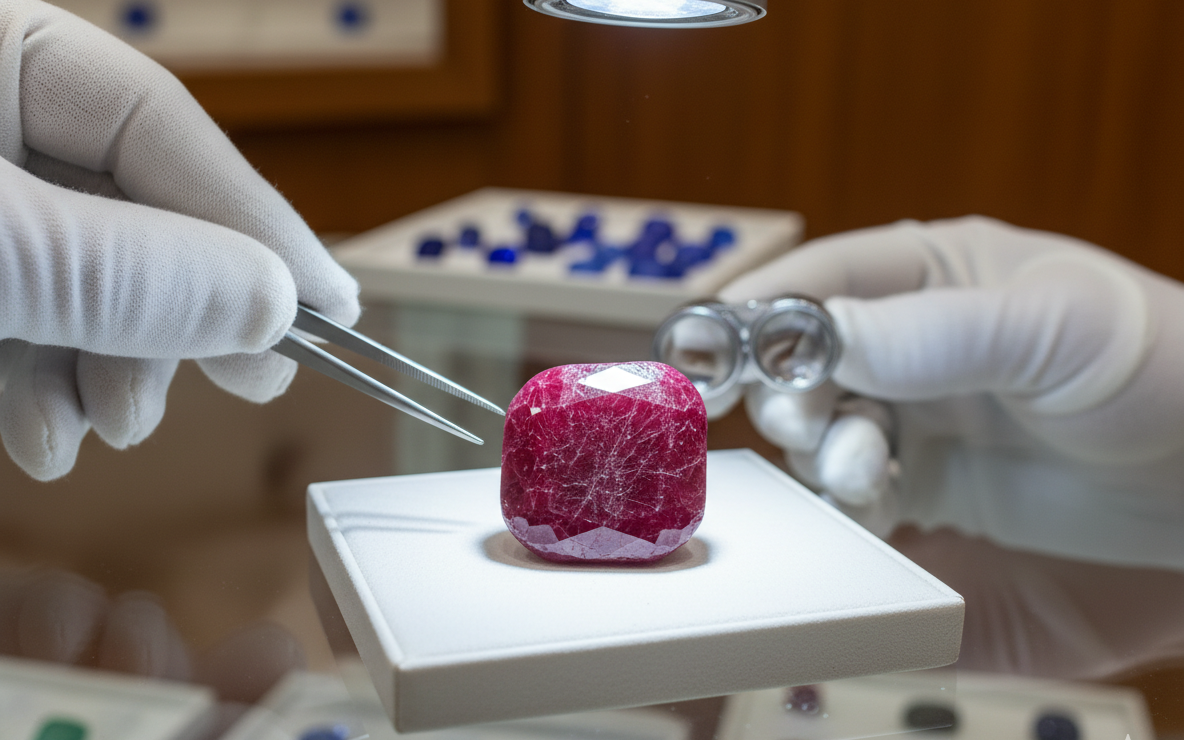
Professional laboratory reports provide independent verification.
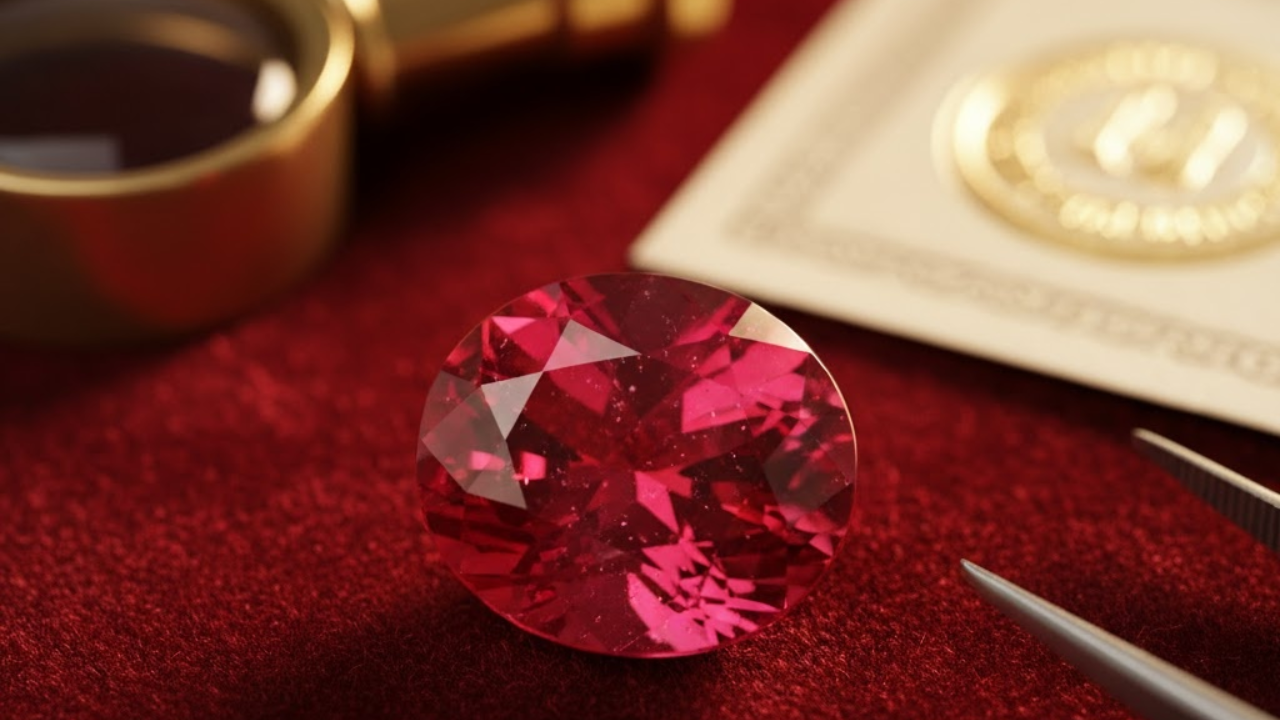
A certified gemstone origin gives buyers confidence that the gemstone has been evaluated using advanced gemological testing methods.
Certificates typically identify:
- Natural or synthetic status
- Treatments
- Species
- Variety
- Geographic origin (when determinable)
Without certification, buyers have little assurance regarding authenticity.
Laboratories That Verify Origin
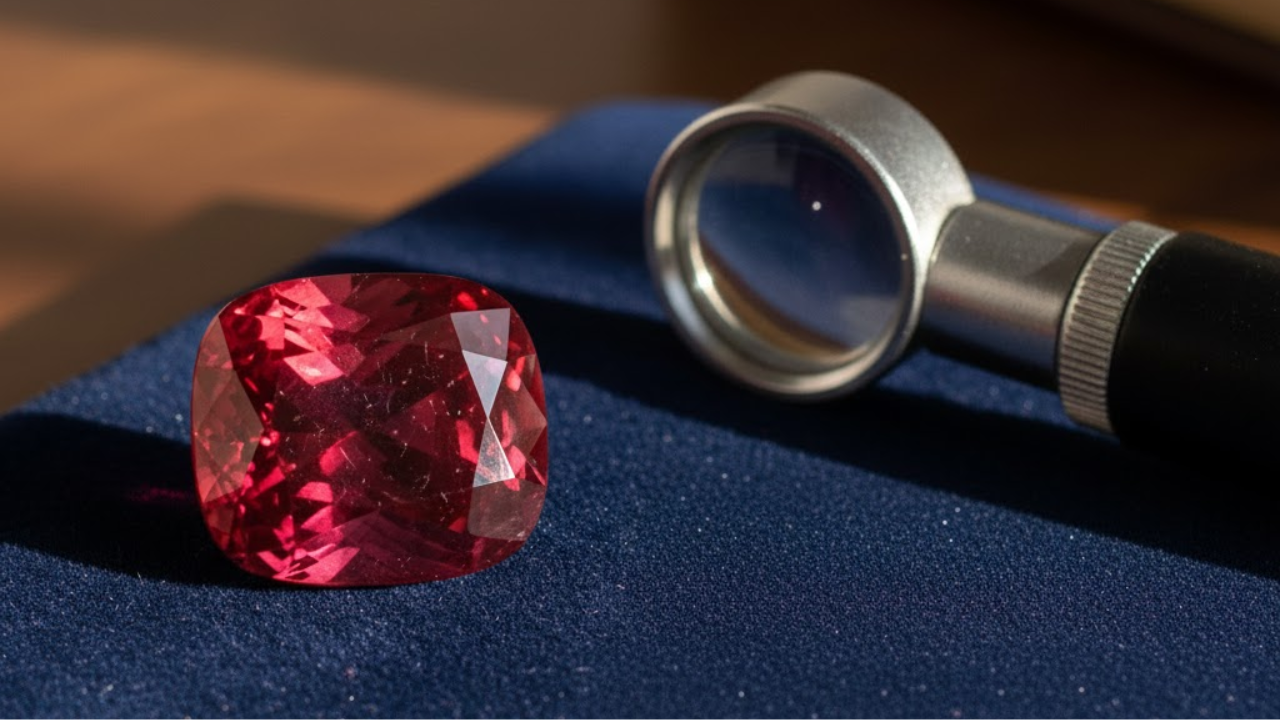
Leading gemological laboratories use sophisticated analytical techniques to estimate origin.
They study:
- Inclusion patterns
- Trace elements
- Crystal growth
- Spectroscopy
- Microscopic characteristics
While origin determination is highly advanced, it remains an expert opinion based on extensive comparison with reference samples from known mining locations.
Choosing gemstones accompanied by reports from reputable laboratories significantly reduces buying risk.
Origin and Color Go Hand in Hand
Color remains the most important quality factor for most gemstones.
Interestingly, origin often influences color consistency.
Examples include:
Sri Lankan Sapphires
- Bright blue
- Excellent brilliance
- High clarity
Burmese Rubies
- Vibrant red
- Strong fluorescence
- Rich saturation
Colombian Emeralds
- Pure green
- Strong color depth
- Exceptional beauty
This relationship between geology and color explains much of the gemstone origin importance.
Investment Buyers Always Check Origin
Collectors rarely purchase expensive gemstones without verifying origin.
Why?
Because origin influences:
- Auction value
- Collector demand
- Long-term appreciation
- Historical desirability
Investment-grade gemstones often include detailed documentation proving their origin.
For high-value purchases, origin becomes almost as important as the gemstone's quality itself.
Does Every Gemstone Need an Origin Certificate?
Not necessarily.
Lower-priced gemstones may not justify the cost of advanced origin testing.
However, certification becomes increasingly valuable when purchasing:
- High-value sapphires
- Rubies
- Emeralds
- Alexandrite
- Spinel
- Paraíba tourmaline
The more expensive the gemstone, the greater the importance of obtaining a certified gemstone origin.
Origin Also Affects Buyer Confidence
Buying gemstones online can be challenging because buyers cannot inspect the stone in person.
Providing verified origin information creates transparency.
Customers are more likely to trust dealers who openly disclose:
- Country of origin
- Treatments
- Certification
- Laboratory reports
- High-quality images
Trust remains one of the strongest competitive advantages in the gemstone industry.
Common Misconceptions About Gemstone Origin
Myth 1: Every Stone From a Famous Country Is Superior
Not true.
Even prestigious mining regions produce stones of varying quality.
Each gemstone should still be evaluated individually.
Myth 2: Origin Is the Only Factor That Matters
False.
Cut, clarity, carat weight, color, and treatments remain equally important.
Origin should complement—not replace—these quality assessments.
Myth 3: Sellers Always Know the Origin
Incorrect.
Without laboratory testing, determining exact origin can be difficult.
Always ask for supporting documentation.
Questions to Ask Before Buying
Before making a purchase, ask:
- What is the gemstone origin?
- Is the origin laboratory certified?
- Has the gemstone received any treatments?
- Is the stone natural?
- Which laboratory issued the certificate?
- Can I verify the report?
These questions protect buyers from misinformation and increase purchasing confidence.
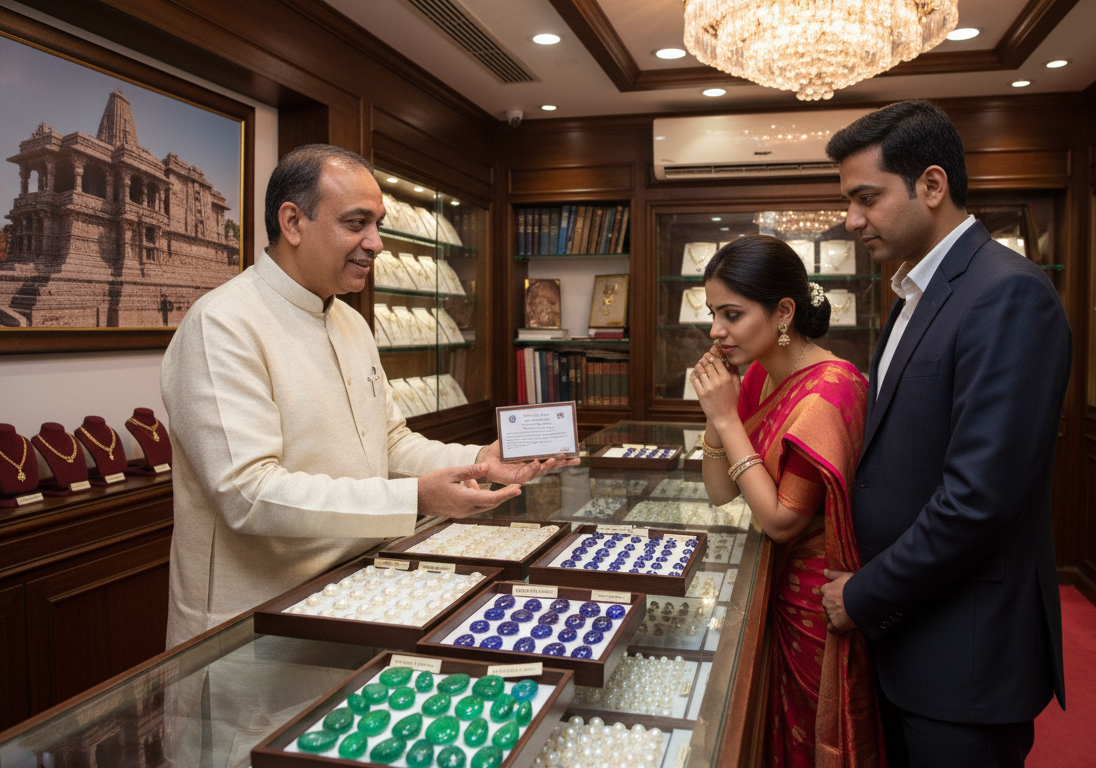
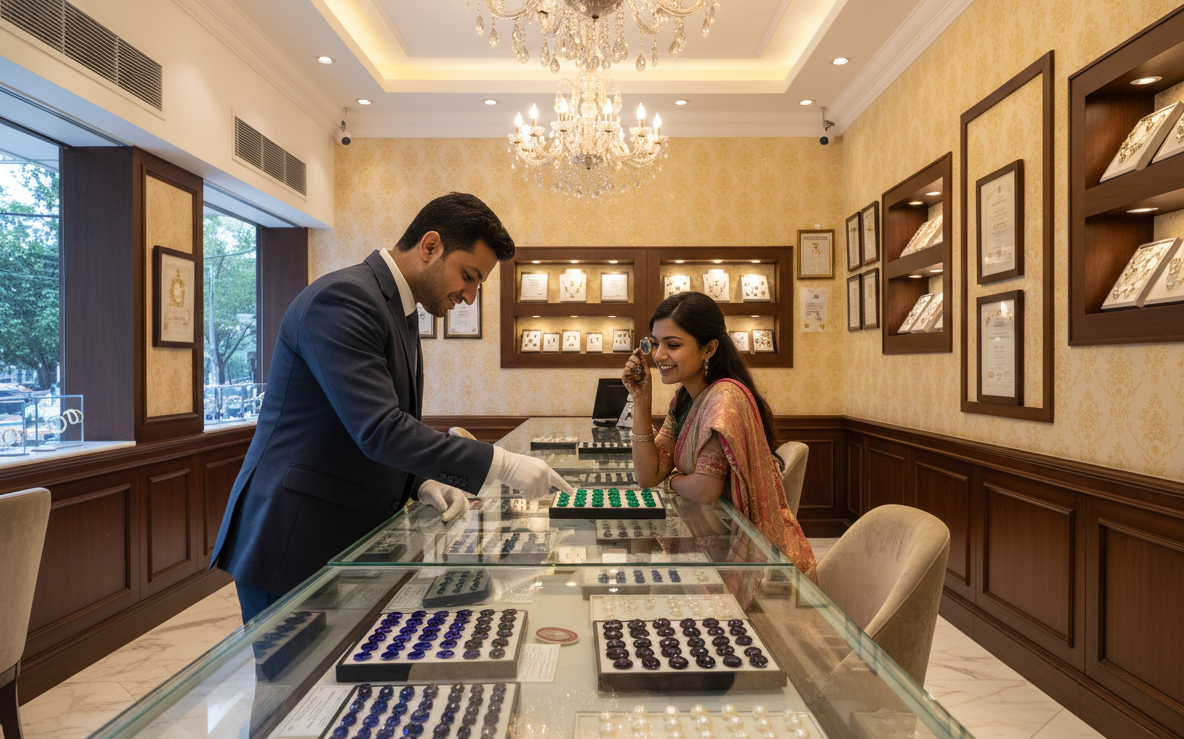
Choosing a Reliable Gemstone Dealer
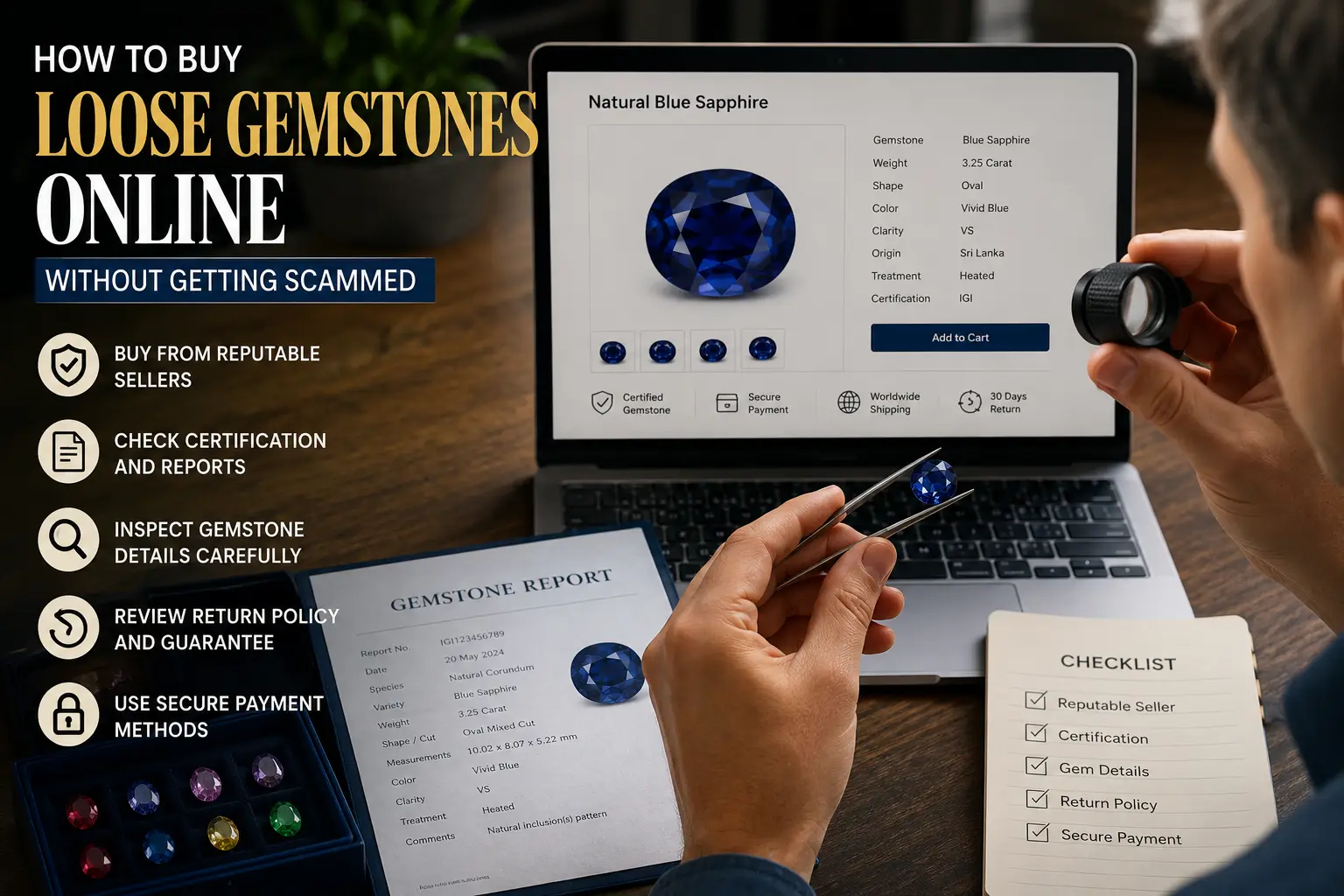
A trustworthy gemstone dealer should always prioritize transparency and authenticity. Rather than relying on marketing claims, reputable dealers provide detailed information about each gemstone, including its origin, treatments (if any), and certification.
When evaluating a dealer, look for these qualities:
- Clear disclosure of the gemstone country of origin
- Availability of recognized laboratory certificates
- Honest pricing based on quality and rarity
- High-resolution images and videos of the actual gemstone
- Responsive customer support to answer technical questions
- A return or exchange policy for added peace of mind
Buying from a reliable dealer ensures that you're investing in genuine gemstones with accurate documentation instead of relying solely on verbal assurances.
The Role of Ethical and Responsible Sourcing
In recent years, buyers have become increasingly conscious of where their gemstones come from—not only because of quality but also because of ethical considerations.
Responsible sourcing supports fair labor practices, safer mining conditions, and environmental stewardship. While the natural gemstone origin primarily refers to where a gemstone was formed and mined, understanding the supply chain can provide additional confidence that your purchase aligns with responsible business practices.
Reputable gemstone dealers often work closely with trusted suppliers and provide as much sourcing information as possible, helping customers make informed and responsible buying decisions.
Why Origin Matters Even for Jewelry Buyers
Many people assume that origin only matters to gemstone collectors or investors. In reality, anyone purchasing gemstone jewelry can benefit from understanding origin.
Whether you're buying an engagement ring, a pendant, earrings, or a custom-designed piece, knowing the origin of the center stone adds meaning and confidence to your purchase. It also becomes valuable information if you ever decide to insure, appraise, or resell the jewelry in the future.
A gemstone with a well-documented history often carries greater sentimental and financial value.
Conclusion
The beauty of a gemstone goes far beyond what the eye can see. Hidden beneath its sparkle lies a remarkable geological history that began millions of years ago. Knowing gemstone origin allows buyers to appreciate that story while making smarter purchasing decisions.
As we have explored, gemstone origin matters. Extends beyond simple geography. Origin influences rarity, beauty, market reputation, pricing, investment potential, and buyer confidence. The importance of gemstone origin becomes especially clear when comparing stones. From legendary mining regions to newer or less-established sources.
Knowing the gemstone country of origin also helps buyers better understand the qualities. That makes certain gemstones so highly in demand. Combined with professional testing, a verified natural gemstone origin offers reassurance. That the stone is genuinely formed by nature rather than created in a laboratory.
Most importantly, purchasing a gemstone with a certified gemstone origin provides transparency and peace of mind. Independent laboratory certification helps confirm authenticity. Supports fair pricing and protects your investment for years to come.
Whether you are purchasing your first gemstone. Adding to a collection, or searching for a meaningful gift. Never overlook the importance of origin. A beautiful gemstone may capture attention. But its origin tells the story that gives it lasting value. By choosing gemstones with verified origins from a trusted dealer, you invest not only in exceptional beauty but also in authenticity, confidence, and timeless worth.
Recent Posts

2026-09-04
The Science Behind Gemstone Fluorescence










2025-09-15